facebook
favorite button
member since icon
Since February 2025
Instructor since February 2025
Translated by GoogleSee original
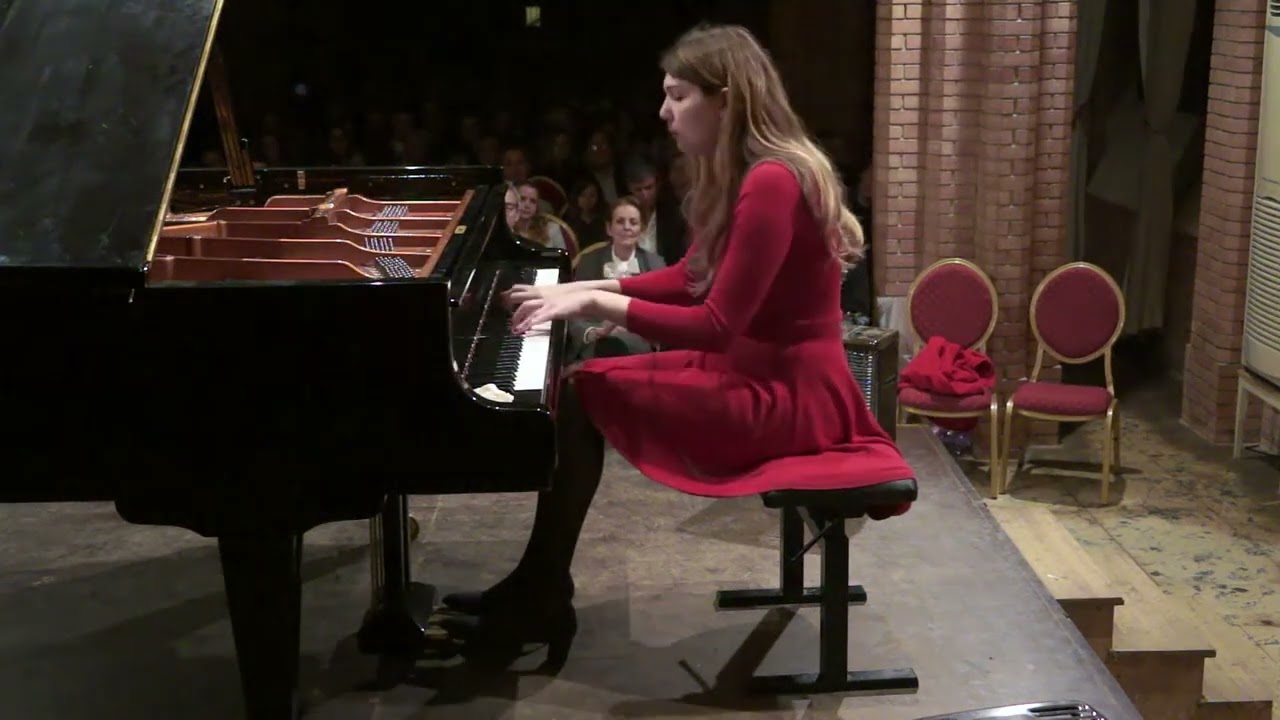
Piano lessons with Shauna - Concert pianist downtown Toulouse
course price icon
From 96.64 C$ /h
arrow icon
Shauna

Passionate and educational, I listen to the needs, sensitivity and desires of my students.
Despite everything, I do not forget the rigor that the Art of the Piano demands.
Preparation for competitions, exams.
Masterclasses, Concerts, Auditions are organized throughout the year for my students and are free.

Study of works adapted to your level.
I attach great importance to sound quality, to a sensitive and comfortable interpretation.
However, the performer must always serve the music he plays and not the other way around...
The works studied come from different creative periods: Baroque, Classical, Romantic, Modern and Contemporary in order to broaden your piano repertoire and thus discover new horizons.
Learn to manage your stress, listen to yourself, get into the piano.
Deep work on memory and concentration.
Proper use of pedals.
The emotions, the narration, the architecture of a beautiful interpretation.
Let's not forget: music is ineffable.
Extra information
We will discuss it together, you must of course have a piano at home.
Location
green drop pin icon
|
Use Ctrl + wheel to zoom!
zoom in iconzoom out icon
location type icon
At teacher's location :
  • Cours de Piano avec Shauna Luxova, Rue Ozenne, Toulouse, France
About Me
Born on June 6 in Moscow, Russia, I grew up with my concert pianist grandmother who introduced me to the piano at the age of 4. At 6, I was admitted to the Gnessin School, where I also received rigorous musical training, then to the Tchaikovsky Conservatory.
Later, at the age of 9, I arrived in France, in Marseille, where I followed the valuable teaching of Ginette Gaubert, who continued to perpetuate the Russian piano tradition and thanks to whom I was a multiple winner of the French Musical Competition.
Another universe opened up to me by continuing lessons with Christiane Berlandini-Laurent, a student of Pierre Barbizet, who organized private concerts at her home. Thus I had the chance to meet great pianists, to attend many recitals and masterclasses (Brigitte Engerer, Abdel Rahman El Bacha, Michel Bourdoncle) and to immerse myself further in the world of classical music.
I continued my studies at the Darius Milhaud Conservatory in Aix en Provence with Michel Leduc, Hubert Woringer and his wife Clara as teachers, where I obtained 1st Prize in Piano, Music Theory and Chamber Music.
Finally, I joined the CNSM in Paris for advanced training with Michel Beroff. After an intensive activity as a concert performer, I now teach in Toulouse and give private concerts and concerts for charities, alone or with musician friends.
These concerts are an opportunity for piano lovers to take lessons or learn this art, to discover varied repertoires and to explore other forms of artistic expression.
They are also an opportunity to introduce the piano to as many people as possible, particularly young people, to bring together the most knowledgeable music lovers, and to bring together other Arts to share synesthesia.
Through rigor, sensitivity, listening and passion, I invest myself with my students who want to learn and perfect the Art of the Piano.
Education
Born on June 6 in Moscow, Russia, I grew up with my concert pianist grandmother who introduced me to the piano at the age of 4. At 6, I was admitted to the Gnessin School, where I also received rigorous musical training, then to the Tchaikovsky Conservatory.
Later, at the age of 9, I arrived in France, in Marseille, where I followed the valuable teaching of Ginette Gaubert, who continued to perpetuate the Russian piano tradition and thanks to whom I was a multiple winner of the French Musical Competition.
Another universe opened up to me by continuing lessons with Christiane Berlandini-Laurent, a student of Pierre Barbizet, who organized private concerts at her home. Thus I had the chance to meet great pianists, to attend many recitals and masterclasses (Brigitte Engerer, Abdel Rahman El Bacha, Michel Bourdoncle) and to immerse myself further in the world of classical music.
I continued my studies at the Darius Milhaud Conservatory in Aix en Provence with Michel Leduc, Hubert Woringer and his wife Clara as teachers, where I obtained 1st Prize in Piano, Music Theory and Chamber Music.
Finally, I joined the CNSM in Paris for advanced training with Michel Beroff. After an intensive activity as a concert performer, I now teach in Toulouse and give private concerts and concerts for charities, alone or with musician friends.
These concerts are an opportunity for piano lovers to take lessons or learn this art, to discover varied repertoires and to explore other forms of artistic expression.
They are also an opportunity to introduce the piano to as many people as possible, particularly young people, to bring together the most knowledgeable music lovers, and to bring together other Arts to share synesthesia.
Through rigor, sensitivity, listening and passion, I invest myself with my students who want to learn and perfect the Art of the Piano.
Experience / Qualifications
Born on June 6 in Moscow, Russia, I grew up with my concert pianist grandmother who introduced me to the piano at the age of 4. At 6, I was admitted to the Gnessin School, where I also received rigorous musical training, then to the Tchaikovsky Conservatory.
Later, at the age of 9, I arrived in France, in Marseille, where I followed the valuable teaching of Ginette Gaubert, who continued to perpetuate the Russian piano tradition and thanks to whom I was a multiple winner of the French Musical Competition.
Another universe opened up to me by continuing lessons with Christiane Berlandini-Laurent, a student of Pierre Barbizet, who organized private concerts at her home. Thus I had the chance to meet great pianists, to attend many recitals and masterclasses (Brigitte Engerer, Abdel Rahman El Bacha, Michel Bourdoncle) and to immerse myself further in the world of classical music.
I continued my studies at the Darius Milhaud Conservatory in Aix en Provence with Michel Leduc, Hubert Woringer and his wife Clara as teachers, where I obtained 1st Prize in Piano, Music Theory and Chamber Music.
Finally, I joined the CNSM in Paris for advanced training with Michel Beroff. After an intensive activity as a concert performer, I now teach in Toulouse and give private concerts and concerts for charities, alone or with musician friends.
These concerts are an opportunity for piano lovers to take lessons or learn this art, to discover varied repertoires and to explore other forms of artistic expression.
They are also an opportunity to introduce the piano to as many people as possible, particularly young people, to bring together the most knowledgeable music lovers, and to bring together other Arts to share synesthesia.
Through rigor, sensitivity, listening and passion, I invest myself with my students who want to learn and perfect the Art of the Piano.
Age
Preschool children (4-6 years old)
Children (7-12 years old)
Teenagers (13-17 years old)
Adults (18-64 years old)
Seniors (65+ years old)
Student level
Beginner
Intermediate
Advanced
Duration
60 minutes
The class is taught in
French
English
Russian
Spanish
Italian
Availability of a typical week
(GMT -05:00)
New York
at teacher icon
At teacher's location
Mon
Tue
Wed
Thu
Fri
Sat
Sun
00-04
04-08
08-12
12-16
16-20
20-24
Similar classes
arrow icon previousarrow icon next
verified badge
Guilhem
** English version below **

A graduate of Berklee College of Music in Boston, I offer Drums lessons (all ages) to beginners, intermediates and advanced.
Sharing music and dialogue with the student are essential for me: I adapt to the needs/desires of each student by offering a musical and instrumental program (in addition to regular work based on technique). Students will be able to play along to playbacks (soundtracks), solo, or simply following a score. The courses will of course be focused on different points, according to your requests. I will use musical language, and teach you how to read a Drum score using simple and effective methods.
I offer a cultural approach to different styles to my students (funk, groove, hip-hop, rock, reggae, jazz, etc.).
I also give lessons in music theory, timpani, djembe, percussion, piano according to your request.

-------------------------------------------------- -----------------------------------------

A graduate of the Berklee College of Music in Boston, I offer drum lessons (all ages) to beginners, intermediates and advanced students.
Sharing music and dialogue with the student is essential to me: I adapt to the needs/desires of each student by offering a musical and instrumental program (in addition to regular technique-based work). Students will be able to play on playback tapes, solo, or simply follow a score. The lessons will of course be focused on different points, depending on your requests. I will use a musical language and teach you to read a drum score using simple and effective methods.
I propose a cultural approach of different styles to my students (funk, groove, hip-hop, rock, reggae, jazz, ...).
I also teach music theory, timpani, djembe, percussion, piano according to your request.
verified badge
Pablo
Professional musician, composer and producer.
10 international experience (Europe, South America, Asia)

Piano lessons, computer music, rhythmic initiation (through beatbox and body percussion) to all types of public.

Attractive teaching method mixing classic and modern.

PIANO LESSON:

My learning methods are modern while reinforcing the fundamental notions of rhythm, interpretation and theory which make the difference between amateurs and professionals.

My specialty is jazz which also helps develop the creative part and the improvisation of the students.

For the youngest we will work on the pleasure of playing music before arriving on classical music theory (essential) but which can quickly disgust a young child. Through new methods such as beatbox, body percussion, we can learn rhythm and independence while having fun.

According to the needs of the students I will develop a tailor-made program for each profile because each person is different, that's why I don't believe in only one way to learn music.

The easiest way is to come and try!

MAO COURSE:

Many people are interested in computer music, essential tools for BeatMaking, Production, etc...

Unfortunately in France it is difficult to find serious training at reasonable prices.
I myself had to go abroad to learn more about it.

I specialize in the following programs: Akai MPC Live, FL Studio.

Beginner who would like to launch into Beatmaking or confirmed who wants to improve the quality of these productions, I offer you all my secrets in composition and mastering.

We begin?
verified badge
Jacqueline
I introduce myself:
Classical singer, professional soloist, good level pianist,
graduated from conservatories
- from Toulouse: 1st prize for singing / 2nd prize for music theory and sight reading
- from Paris (CNSM) Certificates of musical and vocal culture and piano - singers

On the sidelines, then after a career as a lyrical artist in Paris (Opéra Comique/Théâtre Mogador/Espace Cardin, in the RTLN theaters (including Capitole de Toulouse) and abroad (Switzerland/Belgium/Mauritius) I I have been focused on teaching (singing, beginner piano, music theory) for around 25 years.
Experience with children / adults, amateurs / professionals, singers / instrumentalists
I teach traditional music theory which differs from FM (Musical Training), I briefly explain here the differences, the interest and the advantages.
It is based on tonal music, the progressive study of tones and not intervals outside tonal context.
It recommends the separate acquisition of its various components: rhythm, reading notes, intonation
it results in these well-integrated bases, sung sight reading and written dictation

Why work on music theory as a subject in its own right?
Because, in a course "piano / violin / vocals / clarinet ... + music theory", and as I myself have experienced, the pupil and the teacher, accomplices, always favor the instrument and the learning music theory is done in homeopathic doses. The study of the instrument is nevertheless also slowed down because of the multiple interruptions caused by ignorance of music theory.
I am not suggesting that you "get rid" of music theory because its study, contrary to its reputation, is very interesting. But to diversify the difficulties that you encounter: those relating to the instrumental technique and those due to music theory.

I accompany you on the piano and introduce you to the keyboard. A mini-keyboard allows you to work on your intonation at home also following my instructions.
If the level allows it, I also do instrumental and vocal music theory: music theory applied to the study of your pieces, analyzed, deciphered and accompanied on the piano.
Levels: for more precision, up to level "medium 2"
I recommend a weekly frequency (except possibly school holidays), essential for the effectiveness of the course, as well as a minimum personal work at home.
verified badge
Théo
|Child beginner]

Blue Method

a method that prepares the child to understand the pitch of sounds, to read the notes, to learn the rhythm through card games and songs, by drawing, coloring, and of course the practice of the piano in a way alternate.

[Adult/Teen]

Christophe Astie method

Built to advance step by step and this from beginner level 0 in the understanding of the practice of the instrument and the music, it combines practice and musical theory, and this, in a very progressive way.

A piece or two mastered per week in just 10 to 15 minutes of daily practice are necessary at the start.

A rich and varied repertoire: Classical themes, film music, folk music, blues, boogie, ragtime. In the second half of the year, more pop songs are added.

[Advanced Pianist | Musicians]

After one to three years depending on your development and involvement or for already experienced musicians
Develop more advanced concepts if you already have a solid foundation by working on several modules of your choice:
- harmony
- writing
- the arrangement
- improvisation
- Rhythm
- The shade

The courses are aimed at all types of students wishing to reach a level equivalent to the 3rd cycle conservatory or moving towards free expression games and improvised music.

- - - - - - - - - - - - - - - - - - - - - - - - - - - - - - - - - - - - - - - - - - - - - - - - - - - - - - - - - - - - - - - - - - - - - - - - - - - - - - - - - - - - - - - - - - - - -

assess your level:
BEGINNER
You are at Beginner 1 level if you start from zero at the piano Here is what you need to know to consider having acquired this level.

Theory: reading notes in central C position, SOL clef and FA clef / understanding the notions of tone and semitone / quickly identifying notes on the piano / distinguishing left hand and right hand on the score / repeat bar / simple rhythms (black, white, round)

Technique: knowing the numbers for fingering / playing legato on 5 notes, hands separated and hands together, starting on all the white keys / feeling the pulse while playing

Repertoire: pieces whose melody is separated between the 2 hands / many fingerings written so reading notes is optional / rhythms that are simple to read or easy to do by ear because you know the piece / one note at a time in each hand

The 2 pieces of Piano Subito (PBD) are good examples of pieces at this level.
Amazing Grace (gospel, simplified version)
Stand By Me (Ben E. King, simplified version)
Several pieces from Hal Leonard Methods vol. 1, preparatory Bastien and preparatory Alfred.
Several pieces from the book Favorite Classic Melodies (primer level) by James Bastien

INTERMEDIATE
Theory: notes can be read anywhere on the staff, in the 2 keys, including additional lines / formation of dominant seventh chords / good understanding of chord inversions / 6/8 as indicator numbers / classification and qualification of intervals (interval name + major, minor, perfect, augmented or diminished) / know the order of sharps and flats

Technique: scales on 2 octaves hands together (DO – G – D – A – E major, A – D – E, G, C minor) / chords of 3 notes and inversions in all these keys / arpeggios on 2 octaves in eighth hands separated and hands together, root position (DO – G major and A minor) / sequence of chords I-IV-V7-I in other known keys

Repertoire: pieces with arpeggios in the left hand / possible movements in both hands / integrated interpretative elements such as nuances, tempo modifications if requested, playing one hand stronger than the other / rhythm including sixteenth notes / on tackle the ornaments

Mia & Sebastian's Theme (La La Land, PBD version)
Minuet in G major or that in G minor (JS Bach)
Arabesque (Burgmüller)
Rhyme from another summer (Tiersen, simplified version)
Moonlight (Debussy, simplified version)
Soldier's March op. 68 No. 2 (Schumann)
All the boys and the girls (Françoise Hardy, PBD version)
Several pieces from Hal Leonard's Popular Piano Solos (level 3 and 4) notebooks.

Available during our sessions:
- Rönisch baby grand piano.
- a computer with licensed Ableton live 10 (MAO)
- Native Instrument komplete kontrol 13 licensed (MAO)
- Licensed Serum (MAO)
- 2 MIDI ESR 423 Yamaha Keyboards and Control S-88 Native Instrument. (MAO)

e conservatory or moving towards the games of writing and free expression (jazz and improvised music)
Video thumbnail
Play icon
Shauna's video
message icon
Contact Shauna
repeat students icon
1st lesson is backed
by our
Good-fit Instructor Guarantee
Similar classes
arrow icon previousarrow icon next
verified badge
Guilhem
** English version below **

A graduate of Berklee College of Music in Boston, I offer Drums lessons (all ages) to beginners, intermediates and advanced.
Sharing music and dialogue with the student are essential for me: I adapt to the needs/desires of each student by offering a musical and instrumental program (in addition to regular work based on technique). Students will be able to play along to playbacks (soundtracks), solo, or simply following a score. The courses will of course be focused on different points, according to your requests. I will use musical language, and teach you how to read a Drum score using simple and effective methods.
I offer a cultural approach to different styles to my students (funk, groove, hip-hop, rock, reggae, jazz, etc.).
I also give lessons in music theory, timpani, djembe, percussion, piano according to your request.

-------------------------------------------------- -----------------------------------------

A graduate of the Berklee College of Music in Boston, I offer drum lessons (all ages) to beginners, intermediates and advanced students.
Sharing music and dialogue with the student is essential to me: I adapt to the needs/desires of each student by offering a musical and instrumental program (in addition to regular technique-based work). Students will be able to play on playback tapes, solo, or simply follow a score. The lessons will of course be focused on different points, depending on your requests. I will use a musical language and teach you to read a drum score using simple and effective methods.
I propose a cultural approach of different styles to my students (funk, groove, hip-hop, rock, reggae, jazz, ...).
I also teach music theory, timpani, djembe, percussion, piano according to your request.
verified badge
Pablo
Professional musician, composer and producer.
10 international experience (Europe, South America, Asia)

Piano lessons, computer music, rhythmic initiation (through beatbox and body percussion) to all types of public.

Attractive teaching method mixing classic and modern.

PIANO LESSON:

My learning methods are modern while reinforcing the fundamental notions of rhythm, interpretation and theory which make the difference between amateurs and professionals.

My specialty is jazz which also helps develop the creative part and the improvisation of the students.

For the youngest we will work on the pleasure of playing music before arriving on classical music theory (essential) but which can quickly disgust a young child. Through new methods such as beatbox, body percussion, we can learn rhythm and independence while having fun.

According to the needs of the students I will develop a tailor-made program for each profile because each person is different, that's why I don't believe in only one way to learn music.

The easiest way is to come and try!

MAO COURSE:

Many people are interested in computer music, essential tools for BeatMaking, Production, etc...

Unfortunately in France it is difficult to find serious training at reasonable prices.
I myself had to go abroad to learn more about it.

I specialize in the following programs: Akai MPC Live, FL Studio.

Beginner who would like to launch into Beatmaking or confirmed who wants to improve the quality of these productions, I offer you all my secrets in composition and mastering.

We begin?
verified badge
Jacqueline
I introduce myself:
Classical singer, professional soloist, good level pianist,
graduated from conservatories
- from Toulouse: 1st prize for singing / 2nd prize for music theory and sight reading
- from Paris (CNSM) Certificates of musical and vocal culture and piano - singers

On the sidelines, then after a career as a lyrical artist in Paris (Opéra Comique/Théâtre Mogador/Espace Cardin, in the RTLN theaters (including Capitole de Toulouse) and abroad (Switzerland/Belgium/Mauritius) I I have been focused on teaching (singing, beginner piano, music theory) for around 25 years.
Experience with children / adults, amateurs / professionals, singers / instrumentalists
I teach traditional music theory which differs from FM (Musical Training), I briefly explain here the differences, the interest and the advantages.
It is based on tonal music, the progressive study of tones and not intervals outside tonal context.
It recommends the separate acquisition of its various components: rhythm, reading notes, intonation
it results in these well-integrated bases, sung sight reading and written dictation

Why work on music theory as a subject in its own right?
Because, in a course "piano / violin / vocals / clarinet ... + music theory", and as I myself have experienced, the pupil and the teacher, accomplices, always favor the instrument and the learning music theory is done in homeopathic doses. The study of the instrument is nevertheless also slowed down because of the multiple interruptions caused by ignorance of music theory.
I am not suggesting that you "get rid" of music theory because its study, contrary to its reputation, is very interesting. But to diversify the difficulties that you encounter: those relating to the instrumental technique and those due to music theory.

I accompany you on the piano and introduce you to the keyboard. A mini-keyboard allows you to work on your intonation at home also following my instructions.
If the level allows it, I also do instrumental and vocal music theory: music theory applied to the study of your pieces, analyzed, deciphered and accompanied on the piano.
Levels: for more precision, up to level "medium 2"
I recommend a weekly frequency (except possibly school holidays), essential for the effectiveness of the course, as well as a minimum personal work at home.
verified badge
Théo
|Child beginner]

Blue Method

a method that prepares the child to understand the pitch of sounds, to read the notes, to learn the rhythm through card games and songs, by drawing, coloring, and of course the practice of the piano in a way alternate.

[Adult/Teen]

Christophe Astie method

Built to advance step by step and this from beginner level 0 in the understanding of the practice of the instrument and the music, it combines practice and musical theory, and this, in a very progressive way.

A piece or two mastered per week in just 10 to 15 minutes of daily practice are necessary at the start.

A rich and varied repertoire: Classical themes, film music, folk music, blues, boogie, ragtime. In the second half of the year, more pop songs are added.

[Advanced Pianist | Musicians]

After one to three years depending on your development and involvement or for already experienced musicians
Develop more advanced concepts if you already have a solid foundation by working on several modules of your choice:
- harmony
- writing
- the arrangement
- improvisation
- Rhythm
- The shade

The courses are aimed at all types of students wishing to reach a level equivalent to the 3rd cycle conservatory or moving towards free expression games and improvised music.

- - - - - - - - - - - - - - - - - - - - - - - - - - - - - - - - - - - - - - - - - - - - - - - - - - - - - - - - - - - - - - - - - - - - - - - - - - - - - - - - - - - - - - - - - - - - -

assess your level:
BEGINNER
You are at Beginner 1 level if you start from zero at the piano Here is what you need to know to consider having acquired this level.

Theory: reading notes in central C position, SOL clef and FA clef / understanding the notions of tone and semitone / quickly identifying notes on the piano / distinguishing left hand and right hand on the score / repeat bar / simple rhythms (black, white, round)

Technique: knowing the numbers for fingering / playing legato on 5 notes, hands separated and hands together, starting on all the white keys / feeling the pulse while playing

Repertoire: pieces whose melody is separated between the 2 hands / many fingerings written so reading notes is optional / rhythms that are simple to read or easy to do by ear because you know the piece / one note at a time in each hand

The 2 pieces of Piano Subito (PBD) are good examples of pieces at this level.
Amazing Grace (gospel, simplified version)
Stand By Me (Ben E. King, simplified version)
Several pieces from Hal Leonard Methods vol. 1, preparatory Bastien and preparatory Alfred.
Several pieces from the book Favorite Classic Melodies (primer level) by James Bastien

INTERMEDIATE
Theory: notes can be read anywhere on the staff, in the 2 keys, including additional lines / formation of dominant seventh chords / good understanding of chord inversions / 6/8 as indicator numbers / classification and qualification of intervals (interval name + major, minor, perfect, augmented or diminished) / know the order of sharps and flats

Technique: scales on 2 octaves hands together (DO – G – D – A – E major, A – D – E, G, C minor) / chords of 3 notes and inversions in all these keys / arpeggios on 2 octaves in eighth hands separated and hands together, root position (DO – G major and A minor) / sequence of chords I-IV-V7-I in other known keys

Repertoire: pieces with arpeggios in the left hand / possible movements in both hands / integrated interpretative elements such as nuances, tempo modifications if requested, playing one hand stronger than the other / rhythm including sixteenth notes / on tackle the ornaments

Mia & Sebastian's Theme (La La Land, PBD version)
Minuet in G major or that in G minor (JS Bach)
Arabesque (Burgmüller)
Rhyme from another summer (Tiersen, simplified version)
Moonlight (Debussy, simplified version)
Soldier's March op. 68 No. 2 (Schumann)
All the boys and the girls (Françoise Hardy, PBD version)
Several pieces from Hal Leonard's Popular Piano Solos (level 3 and 4) notebooks.

Available during our sessions:
- Rönisch baby grand piano.
- a computer with licensed Ableton live 10 (MAO)
- Native Instrument komplete kontrol 13 licensed (MAO)
- Licensed Serum (MAO)
- 2 MIDI ESR 423 Yamaha Keyboards and Control S-88 Native Instrument. (MAO)

e conservatory or moving towards the games of writing and free expression (jazz and improvised music)
Good-fit Instructor Guarantee
favorite button
message icon
Contact Shauna