


Translated by Google
Australian didgeridoo court for all levels

From 48.18 C$ /h

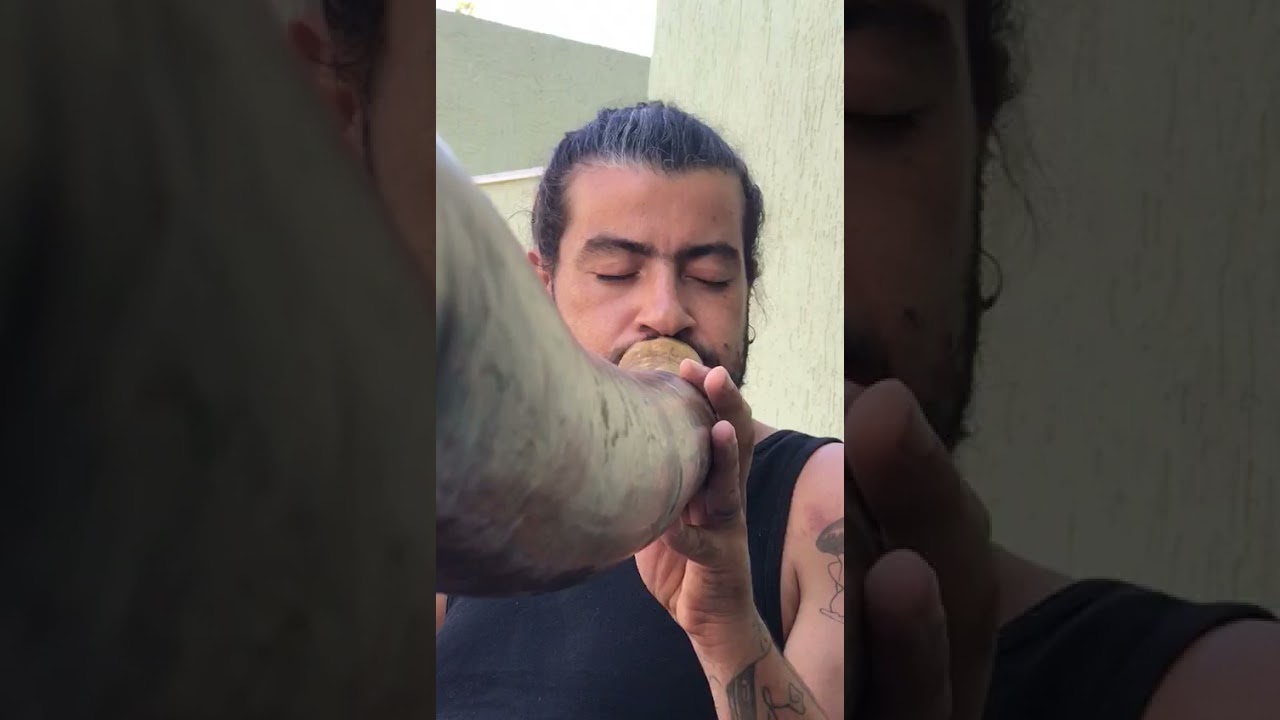
Are you intrigued by this approximately 30,000-year-old eucalyptus stick and would you like to learn how to play Didgeridoo? In this Didgeridoo course, you will follow step by step a complete training allowing you to tame this atypical Australian instrument. You will approach the instrument with ease. You will understand that learning the Didgeridoo is only a question of very "soft" and controlled techniques to make your Australian instrument "sound", In this didgeridoo course, your trainer, will make you discover the whole universe of the didgeridoo , how to play the didgeridoo, the history of this Australian instrument, the breath, more advanced techniques such as circular breathing are just as many themes that you will address during this training to learn the didgeridoo. This training will allow you to reach a level equivalent to about 3 years of practice.
Discover our body with its respiratory system to better learn the didgeridoo
Understanding, Positioning and Control of the Air Column
Develop the independence of our muscles of the mouth, facies, cheeks, tongue, jaw ...
How to play the didgeridoo: master solid and effective sound bases
Control Circular Breathing and its variants, Vocalises and several types of percussion
Analyze, reproduce and acquire notions of musical rhythms that surround us on a daily basis
Kick back and relax while playing this Australian instrument and practicing music!
Listening to music and our environment differently
Discover our body with its respiratory system to better learn the didgeridoo
Understanding, Positioning and Control of the Air Column
Develop the independence of our muscles of the mouth, facies, cheeks, tongue, jaw ...
How to play the didgeridoo: master solid and effective sound bases
Control Circular Breathing and its variants, Vocalises and several types of percussion
Analyze, reproduce and acquire notions of musical rhythms that surround us on a daily basis
Kick back and relax while playing this Australian instrument and practicing music!
Listening to music and our environment differently
Extra information
for those who do not have an instrument, I can provide the instrument (rental or purchase).
Location

Online from Tunisia
About Me
Thanks to the regular practice of the didgeridoo, I reached a recognized professional level, in fact I am approved by "World-Wide Didgeridoo directory" as Players - Makers and Teacher.
Currently I am proud to be the only manufacturer and professional player in Tunisia, vector of a culture still unknown and which has existed since the dawn of time and I wish to communicate this knowledge to the youngest to leave behind me a new generation of football player. modern didgeridoo.
I have spent a good part of my life studying the relationship between object and sound. As a multi-instrumentalist at the base percussionist at the Conservatory and after having been the jack-of-all-trades, I made myself known on the Internet by original interpretations with the didgeridoo deconstructed around the Tunisian rhythmic heritage I play alone, thanks to a palette of several instruments, some imagined by me, spiritual repertoires and enough for the flow. Music is certainly the most difficult art to explain. Music is only made up of immateriality, sounds, rhythms, and magic ... Because if music could be said with words, it would be literature!
New music is even more elusive, because there are not many points of comparison, it cannot be put away, nor easily categorized. The goal of music is to move, to light up stars in the eyes of those who listen to it. I taste the pleasure of making new sound alloys by making the music that I love flow together. So my music is constantly expanding its limits ... It vibrates today in a creative musical universe with clear spatial resonances, between sufficient music, spiritual and ultra modern. the music that lives in me is mixed music. I am nourished by jazz, soul, oriental music, stambeli, African music, ethnic music, tribal, native rhythm. I am crazy about the rhythm.
Since my earliest childhood, I have dreamed only of freedom, beauty and art nouveau ... Questioning oneself, discovering what we do not know or inventing what does not yet exist, n isn't it one of the most exciting things in life?
Currently I am proud to be the only manufacturer and professional player in Tunisia, vector of a culture still unknown and which has existed since the dawn of time and I wish to communicate this knowledge to the youngest to leave behind me a new generation of football player. modern didgeridoo.
I have spent a good part of my life studying the relationship between object and sound. As a multi-instrumentalist at the base percussionist at the Conservatory and after having been the jack-of-all-trades, I made myself known on the Internet by original interpretations with the didgeridoo deconstructed around the Tunisian rhythmic heritage I play alone, thanks to a palette of several instruments, some imagined by me, spiritual repertoires and enough for the flow. Music is certainly the most difficult art to explain. Music is only made up of immateriality, sounds, rhythms, and magic ... Because if music could be said with words, it would be literature!
New music is even more elusive, because there are not many points of comparison, it cannot be put away, nor easily categorized. The goal of music is to move, to light up stars in the eyes of those who listen to it. I taste the pleasure of making new sound alloys by making the music that I love flow together. So my music is constantly expanding its limits ... It vibrates today in a creative musical universe with clear spatial resonances, between sufficient music, spiritual and ultra modern. the music that lives in me is mixed music. I am nourished by jazz, soul, oriental music, stambeli, African music, ethnic music, tribal, native rhythm. I am crazy about the rhythm.
Since my earliest childhood, I have dreamed only of freedom, beauty and art nouveau ... Questioning oneself, discovering what we do not know or inventing what does not yet exist, n isn't it one of the most exciting things in life?
Education
Pedagogically, the student will learn to:
Listen: the sounds of the instrument to create many and always new ones.
Listening: another style of playing, in order to hear new sounds and try to reproduce them.
Breathe: knowing how to breathe has many virtues for the whole body. To approach the practice of the didgeridoo, conscious breathing is worked on and becomes essential.
Feel your body: accept to listen to your body.
Although it is easy to access, to emit sounds correctly it is necessary to be aware of the interaction of the organs for the production of sounds and then in the work of rhythms.
Persevere: without perseverance, there is no correct result possible.
Concentration: in music, whatever the instrument practiced, concentration is necessary and essential.
Accept novelty: get out of stereotypes and be open-minded to discover another musical practice.
On the pedagogical level, the student will be put in a situation of:
Discover the didgeridoo while listening.
Verbalize, put into words what they feel, hear.
Verbalize what everyone feels and understands. Going from action to putting it into words allows cognitively to build knowledge.
Practice through discovery the student will be able to be active. The production of the first sounds can be difficult but also very motivating. Through this very active participation, the enthusiasm is very strong.
Challenge yourself and others. Making more and more sounds, different sounds, longer and longer sounds quickly becomes a source of pleasure.
Understand by feeling your body, the interactions between organs and the effects produced on sounds.
The pupil is thus active and actors.
On the educational level, the student will be able to use and transfer his knowledge:
In everyday life: knowing how to breathe helps to regulate your emotions.
In professional life, knowing how to listen to others is essential, knowing how to breathe allows you to postpone your reactions and to regulate your stress.
The openness of mind necessary for the practice of this unconventional instrument is undoubtedly present when choosing the instrument, but one can think that a more in-depth discovery will accentuate this quality.
The program of a one-session discovery course:
Duration: 4 hours
Presentation of the didgeridoo and its history.
Discovery of the different organs that can create sound: lungs, vocal cords, tongue, cheeks, throat, diaphragm, jaw and lips.
Breathing exercise. Heating of the main organs: lips, cheeks, vocal cords.
Initiation for a first discovery of the basic sound also called: the drone.
Discovery and practice of different sounds in relation to the different organs:
- Vocal cords: animal cries.
- The cheeks and the tongue: the vowels: OU-OAEUI.
- Language and throat: simple consonants: TE and KE.
- The lips: the supercharging.
- Simple rhythm creation with the beatbox technique.
Each session is enhanced by a small musical performance. During the various exercises, the importance of a correctly carried out breathing is underlined. The number of sessions can of course vary depending on expectations.
Listen: the sounds of the instrument to create many and always new ones.
Listening: another style of playing, in order to hear new sounds and try to reproduce them.
Breathe: knowing how to breathe has many virtues for the whole body. To approach the practice of the didgeridoo, conscious breathing is worked on and becomes essential.
Feel your body: accept to listen to your body.
Although it is easy to access, to emit sounds correctly it is necessary to be aware of the interaction of the organs for the production of sounds and then in the work of rhythms.
Persevere: without perseverance, there is no correct result possible.
Concentration: in music, whatever the instrument practiced, concentration is necessary and essential.
Accept novelty: get out of stereotypes and be open-minded to discover another musical practice.
On the pedagogical level, the student will be put in a situation of:
Discover the didgeridoo while listening.
Verbalize, put into words what they feel, hear.
Verbalize what everyone feels and understands. Going from action to putting it into words allows cognitively to build knowledge.
Practice through discovery the student will be able to be active. The production of the first sounds can be difficult but also very motivating. Through this very active participation, the enthusiasm is very strong.
Challenge yourself and others. Making more and more sounds, different sounds, longer and longer sounds quickly becomes a source of pleasure.
Understand by feeling your body, the interactions between organs and the effects produced on sounds.
The pupil is thus active and actors.
On the educational level, the student will be able to use and transfer his knowledge:
In everyday life: knowing how to breathe helps to regulate your emotions.
In professional life, knowing how to listen to others is essential, knowing how to breathe allows you to postpone your reactions and to regulate your stress.
The openness of mind necessary for the practice of this unconventional instrument is undoubtedly present when choosing the instrument, but one can think that a more in-depth discovery will accentuate this quality.
The program of a one-session discovery course:
Duration: 4 hours
Presentation of the didgeridoo and its history.
Discovery of the different organs that can create sound: lungs, vocal cords, tongue, cheeks, throat, diaphragm, jaw and lips.
Breathing exercise. Heating of the main organs: lips, cheeks, vocal cords.
Initiation for a first discovery of the basic sound also called: the drone.
Discovery and practice of different sounds in relation to the different organs:
- Vocal cords: animal cries.
- The cheeks and the tongue: the vowels: OU-OAEUI.
- Language and throat: simple consonants: TE and KE.
- The lips: the supercharging.
- Simple rhythm creation with the beatbox technique.
Each session is enhanced by a small musical performance. During the various exercises, the importance of a correctly carried out breathing is underlined. The number of sessions can of course vary depending on expectations.
Experience / Qualifications
I am a professional musician, player and manufacturer of Australian didgeridoo for more than 8 years I master advanced rhythmic and harmonic techniques, holder of a professional card obtained in April 2019 percussion specialty, didgeridoo instrument.
From childhood I was surrounded by musical instruments in the family home which only has music lovers of all generations. Self-taught, however, I enroll for a short period at the conservatory to learn the basics of rhythm. Rock lover like most young people, I bought drums and learned to play them on my own, then I turned to other instruments, always in search of new sounds. This quest goes beyond the restricted circle of classical instruments and is part of the smallest daily deeds and gestures. An unusual object picked up on a sidewalk, a sound produced by a natural element, the sound of branches, flowing water, are all sources that I collect over time by recording them and that I keep preciously. I consider that the city pollutes our ears and alienates us and that music is everywhere, you just have to listen: the noise that the wind makes on a beach, added to that of the waves, is a pure marvel. Hearing is a vital sense for the artist.
I am basically a percussionist, I started taking percussion lessons at a very young age, I continued my journey over the years, I acquired mastery of several instruments such as: the harp, the didgeridoo, the gombri, douf and several other so-called aboriginal instruments.
I offer a unique and innovative course. Indeed, the didgeridoo is relatively unknown to the general public and therefore attracts the curiosity of young and old alike. The course offered is accessible to all because it is very fun. She is always very motivating by the giggles that the first sounds emitted. During the course the student will be actor and active.
The didgeridoo, this wind instrument allows:
- to know his body because it is he who authorizes the emission of sound,
- work on your breathing,
- to develop their creativity,
- express themselves musically very quickly.
The practice of the didgeridoo does not require any particular knowledge, it is enough to have a body ... and the technique will be brought to you during the intervention.
The program alternates between vocal expression, experimentation with sounds and noises, approach to percussion with simple rhythms, development of listening and movement, moments of relaxation and relaxation.
From childhood I was surrounded by musical instruments in the family home which only has music lovers of all generations. Self-taught, however, I enroll for a short period at the conservatory to learn the basics of rhythm. Rock lover like most young people, I bought drums and learned to play them on my own, then I turned to other instruments, always in search of new sounds. This quest goes beyond the restricted circle of classical instruments and is part of the smallest daily deeds and gestures. An unusual object picked up on a sidewalk, a sound produced by a natural element, the sound of branches, flowing water, are all sources that I collect over time by recording them and that I keep preciously. I consider that the city pollutes our ears and alienates us and that music is everywhere, you just have to listen: the noise that the wind makes on a beach, added to that of the waves, is a pure marvel. Hearing is a vital sense for the artist.
I am basically a percussionist, I started taking percussion lessons at a very young age, I continued my journey over the years, I acquired mastery of several instruments such as: the harp, the didgeridoo, the gombri, douf and several other so-called aboriginal instruments.
I offer a unique and innovative course. Indeed, the didgeridoo is relatively unknown to the general public and therefore attracts the curiosity of young and old alike. The course offered is accessible to all because it is very fun. She is always very motivating by the giggles that the first sounds emitted. During the course the student will be actor and active.
The didgeridoo, this wind instrument allows:
- to know his body because it is he who authorizes the emission of sound,
- work on your breathing,
- to develop their creativity,
- express themselves musically very quickly.
The practice of the didgeridoo does not require any particular knowledge, it is enough to have a body ... and the technique will be brought to you during the intervention.
The program alternates between vocal expression, experimentation with sounds and noises, approach to percussion with simple rhythms, development of listening and movement, moments of relaxation and relaxation.
Age
Children (7-12 years old)
Teenagers (13-17 years old)
Adults (18-64 years old)
Seniors (65+ years old)
Student level
Beginner
Intermediate
Advanced
Duration
60 minutes
120 minutes
The class is taught in
French
Arabic
English

Reviews
Availability of a typical week
(GMT -05:00)
New York

Online via webcam
Mon
Tue
Wed
Thu
Fri
Sat
Sun
00-04
04-08
08-12
12-16
16-20
20-24
The most complete and effective course to learn to play the handpan quickly.
The handpan is a very easy instrument to use and learn. It is indeed possible to learn the handpan to intuitively practice your own music. The advantage that this musical instrument offers is that there is no musical basis required to know how to play it.
The handpan is a very easy instrument to use and learn. It is indeed possible to learn the handpan to intuitively practice your own music. The advantage that this musical instrument offers is that there is no musical basis required to know how to play it.
If you plan to visit Tunisia, I am your man, to know everything about Tunisia, the best bars where you have to go, or find what, the best plans to find everything. In addition to the language.
Show more
Similar classes




Similar classes
Good-fit Instructor Guarantee


Contact Jathb