facebook
favorite button
1/3
member since icon
Since January 2026
Instructor since January 2026
Python, web development and databases for students
course price icon
From 58 C$ /h
arrow icon
Python programming
Algorithms
Data base
web development
HTML5, CSS3, JavaScript, PHP, SQL
Everything for high school students or students during customized training according to their needs, and don't forget your computers.
Extra information
Computer
Location
location type icon
Online from Tunisia
About Me
vous êtes la bienvenue, on vous aide à développer un esprit critique et un profil développeur avec des méthodes intelligente. La programmation, l'algorithmique , les bases de données et le développement web sera un atout. Mais le plus important de suivre les instructions et faire et refaire ce qu'in fait ensemble.
Education
avec mastère de recherche en IA, je suis chercheur en Data science et enseignant d'informatique titulaire chez le ministère de l'éducation et une grande expérience avec les classes moyennes et terminales
Experience / Qualifications
avec 16 ans d'expérience avec l'enseignement, pédagogie et nouvelles technologies tel que Python, data science et intelligence artificielle
Age
Teenagers (13-17 years old)
Adults (18-64 years old)
Student level
Beginner
Intermediate
Advanced
Duration
60 minutes
90 minutes
120 minutes
The class is taught in
English
French
Availability of a typical week
(GMT -04:00)
New York
at teacher icon
Online via webcam
Mon
Tue
Wed
Thu
Fri
Sat
Sun
00-04
04-08
08-12
12-16
16-20
20-24
Similar classes
arrow icon previousarrow icon next
verified badge
Python is one of the best, if not the best, language to start learning programming. It is also one of the most widely used languages today, especially in cutting-edge areas such as machine learning.

This popularity means that Python is constantly evolving. It offers a wide range of tools and libraries, which are free and very varied.

As an aeronautical engineer, I like to share my knowledge and derive satisfaction from it by teaching and motivating others.

I'm used to working with people of different ages. I believe in the importance of segmenting learning, visualizing progress, setting concrete goals and practicing regularly.

Beyond these general principles, there is no magic rule or method. Some approaches work with some students but not with others. Adaptation to individual needs is therefore the main objective of private lessons. So I will do my best to find what motivates and helps my student.
verified badge
Learn to code with method and logic
Whether it's to succeed in the NSI (Digital Sciences and Technology) specialization in high school, design personal projects, or prepare for higher scientific studies, mastering code relies on solid algorithmic thinking. I help students understand the structure of programming languages and the logic of data.

Subject areas and languages taught:

Algorithms & Logic: Designing data structures and solving problems.

Programming Languages: Python, C/C++, C# and Java.

Data Management: Analysis and SQL queries / databases.

Basic Web Development: HTML & CSS for creating structured pages.

The goal is to take the student from simply writing code to true autonomy in development.
verified badge
Are you a university student, engineer, or professional who needs to actually use data — not just learn theory about it?
This course is built around real problems and real code. We skip the textbook formulas and go straight to applying statistics and data science the way professionals do: with Python (pandas, NumPy, scikit-learn, matplotlib) and R (RStudio).
What we cover, adapted to your level and goals:
- Descriptive and inferential statistics (the ones that actually matter)
- Data cleaning, exploration, and visualization
- Regression, classification, and intro to machine learning
- Time series and forecasting basics
- R for statistical analysis and academic research

Who this is for:
- University students in statistics, economics, engineering, or biology
- Professionals wanting to move into data analysis or data science
- Researchers who need to process and present data properly

I use Python and R professionally as a working engineer — everything I teach comes from real application, not just academic exercises.
verified badge
Python is a powerful and versatile programming language with countless possibilities. You can use it for data analysis, image processing, automation, software development, hardware control, and much more.

Do you want to create your own software?
Work with data or images?
Automate repetitive tasks?
Control or manage your own hardware?

Whether you are just starting to learn Python or already have a specific project and need some guidance, I would be happy to help you.

My goal is to explain things clearly, adapt to your level, and help you understand not only how to make something work, but also why it works.

Let's turn your ideas into working Python projects!
verified badge
Master Python with Personalized Courses

Discover the art of programming with Python courses tailor-made to meet your specific needs. Whether you are a beginner, intermediate or professional, my lessons are suitable for all levels.

Why Choose My Courses?

Personalized Teaching Approach: Each course is tailored to your skill level and individual goals.

Practical Experience: Learn by doing with real-world projects that build your understanding and skills.

Ongoing Support: Get unlimited email support for any questions you have between sessions.

As a Python expert, I have a passion for teaching and sharing my knowledge. My goal is to guide you effectively in your learning journey.

Book Your First Lesson:

Start your journey to Python mastery now by booking your first lesson. Whether you aspire to enter the development field or hone your existing skills, these courses are designed for you.
verified badge
Discover programming lessons suitable for children! With a fun and educational approach, my lessons allow young minds to dive into the fascinating world of programming. Provide your children with an enriching learning opportunity in a fun and stimulating environment.
verified badge
Do you need professional support for your quantitative data analysis?
I offer you a personalized service, adapted to your academic or professional needs.

Whether you are a student, researcher, consultant or professional, I put my expertise at your disposal to help you:
Prepare and organize your databases,
Perform reliable statistical analyses with R, Stata, SPSS...
Interpret your results rigorously,
Present your work in the form of clear reports, graphics and publications.
Each project is handled with rigor, pedagogy, and confidentiality. You benefit from tailored support, whether for a professional assignment, a dissertation, a thesis, or a publication.

For those who wish to train in parallel, I have also designed a complete course to learn how to explore, manipulate and analyze your data independently.
verified badge
I teach Python specifically for finance and data applications - the kind used in economics, business analytics, and quantitative programs. This isn't a general "learn to code" course; it's built around real financial data, benchmarking, and the workflows you'll actually use in coursework or early career work.

Topics include:
Python fundamentals through a finance lens (data structures, functions, control flow).
Working with financial data and datasets.
Performance benchmarking and writing efficient code.
Applying concepts from Hilpisch's Python for Finance.
verified badge
This course is designed to introduce students aged 7 to 16 to the world of programming through two of the most widely used and industry-relevant languages: C++ and Python.

The class provides a structured, age-appropriate pathway into programming, whether the student is a complete beginner or already exploring coding through platforms like Scratch or Code.org. Emphasis is placed on understanding logic, building problem-solving skills, and writing real code in a supportive, project-based environment.

Taught by an engineering student with hands-on experience in both C++ and Python, this course empowers students to explore the power of code and build a strong foundation in computational thinking — essential for future studies in engineering, robotics, AI, or game development.
verified badge
Private Programming Lessons for you / your family / your company employees
Programming Tutor – IGCSE & Computer Science Subjects
Deeper understanding, stronger results

• Lecturer at the American University AUC
• Over 20 years of experience in training students for government employees, oil companies (BP), food companies (Nestle), banks (CIB), and telecommunications companies (Vodafone).

• Teaching curricula, syllabuses, courses:
o IGCSE (Computer Science 0478, ICT 0417)
o Programming and computer courses for all educational levels (from primary to university)
o Microsoft Windows, Word, Excel, PowerPoint, Outlook, MS-Project
o Programming, C, C++, VB.NET, C#, Python, Database, SQL, MQL, VBA
o HTML, CSS, JavaScript, Angular
o Different database systems
o Data analysis using Excel
o Computer and Information Colleges Curricula
o Using artificial intelligence in life and work

• Master office applications to improve your job performance.
• Prepare yourself to work as a Front-End / Back-End / Full Stack Developer
• Theoretical and practical training for market requirements
• Don't miss out on technology. Lessons are designed for the elderly, in a simple and understandable way (use of computers and their programs, use of mobile phones, dealing with the Internet and social media).
• Lessons are available in person or online.
verified badge
I teach machine learning, AI and Python online to university students, postgraduates, career changers and serious beginners across the UK and Europe. Lessons are in English.

I hold an MSc in Electronics and Electrical Engineering with Distinction and I teach as a Visiting Lecturer on a Master's level module covering data analytics, machine learning and generative AI at a UK university. I also have two accepted international conference papers on deep learning for image classification. I set and mark postgraduate assignments myself, so I know where marks are won and lost on this kind of work.

Who this is for

Undergraduates and postgraduates on AI, ML, data science or computer science modules at any European university. Final year, Master's and thesis students working on a machine learning project. IB and A Level students moving into computing or engineering. Professionals retraining for data roles. Complete beginners who want to learn Python properly rather than copying it from videos.

I work with students on UK, IB and continental European programmes. I have tutored engineering students in Germany and international school students across several countries, so an unfamiliar syllabus or a module taught in a different structure is not a problem. Send me the material and I will work from it.

What we cover

Python for data science with NumPy, Pandas, Matplotlib and scikit-learn. Deep learning using TensorFlow and Keras. Core theory including regression, classification, clustering, decision trees, random forests, neural networks and CNNs, together with the linear algebra, calculus and statistics underneath them. Computer vision and image classification, which is my published research area. Model evaluation, overfitting and hyperparameter tuning. Writing machine learning work up to academic standard, covering methodology, results and critical evaluation.

How lessons work

Send me your module handbook, assignment brief, thesis spec or the code that will not run, and I plan the session around it before we meet. Nothing generic.

In the lesson I explain the concept with a worked example, then you take the keyboard while I watch and correct, because you learn far more doing it than watching me do it. You finish with annotated notes and a clear next step, and you can message me between sessions with questions.

Practical details

Online over Google Meet or Zoom with screen sharing and a shared whiteboard. Sessions run 60 or 90 minutes. I am based in the UK and teach across GMT and Central European time, with evening and weekend slots that suit students anywhere in Europe.

Tell me your course, your deadline and exactly where you are stuck, and I will come back with a plan for the first session.
verified badge
A- TOPICS YOU CAN EXPLORE AND MASTER:
1- PYTHON FOUNDATIONS
• Variables, data types, operators, conditional structures, loops, functions, modules, files, exceptions, and object-oriented programming
• Lists, tuples, dictionaries, sets, comprehensions, debugging, and writing clear, reusable, well-structured code
• Jupyter Notebook, Anaconda, Visual Studio Code, virtual environments, and package management

2 — PROGRAMMING, ALGORITHMS, AND COMPUTER SCIENCE FOUNDATIONS
• Algorithmic thinking, problem decomposition, pseudocode, flowcharts, procedural programming, object-oriented programming, recursion, and modular program design
• Fundamental data structures including arrays, lists, stacks, queues, dictionaries/hash tables, sets, trees, graphs, and their appropriate use
• Searching, sorting, traversal, algorithm efficiency, computational complexity, Big-O notation, debugging, testing, code organization, and problem-solving strategies
• Practical programming exercises ranging from beginner problems to university-level algorithmic and computational challenges

3- DATA PREPARATION AND EXPLORATION
• NumPy and pandas for importing, cleaning, transforming, filtering, grouping, reshaping, and merging data
• Missing values, duplicates, outliers, inconsistent formats, data leakage, and data-quality validation
• Exploratory data analysis using descriptive statistics, Matplotlib, Seaborn, and graphical interpretation

4- MATHEMATICAL FOUNDATIONS
• Linear algebra, vectors, matrices, derivatives, optimization, probability, and statistics
• Loss functions, gradients, distance measures, regularization, likelihood, and model complexity
• Mathematical concepts are explained according to the learner’s level and the requirements of the selected algorithms

5- SUPERVISED MACHINE LEARNING
• Linear and polynomial regression, logistic regression, and regularized models
• k-nearest neighbours, decision trees, random forests, gradient boosting, support vector machines, and Naive Bayes classifiers
• Classification, regression, model assumptions, decision boundaries, feature importance, and interpretation of results

6- UNSUPERVISED LEARNING
• Clustering using k-means, hierarchical clustering, and density-based methods
• Principal component analysis, dimensionality reduction, anomaly detection, and pattern or structure discovery
• Method selection, evaluation of data structure, and interpretation of results without predefined labels

7- MODEL EVALUATION AND IMPROVEMENT
• Training, validation, and test sets; cross-validation; hyperparameter optimization
• Accuracy, precision, recall, specificity, F1 score, ROC–AUC, confusion matrices, MAE, MSE, RMSE, and R2
• Underfitting, overfitting, bias–variance trade-off, class imbalance, feature engineering, feature selection, scaling, and regularization

8- DEEP LEARNING
• Neural-network foundations, activation functions, forward propagation, backpropagation, and gradient descent
• Multilayer perceptrons, convolutional neural networks, recurrent neural networks, and Transformer foundations
• TensorFlow, Keras, or PyTorch depending on the learner’s project and working environment

9- ARTIFICIAL INTELLIGENCE APPLICATIONS
• Natural language processing, text classification, embeddings, sentiment analysis, and foundations of language models
• Computer vision, image classification, fundamental principles of object detection, and image preprocessing
• Recommendation systems, forecasting, anomaly detection, intelligent automation, and decision-support applications

10- GENERATIVE AI AND LARGE LANGUAGE MODELS
• Transformer architecture, tokens, embeddings, attention mechanisms, prompt engineering, Retrieval-Augmented Generation (RAG), and model evaluation
• Use of artificial-intelligence APIs, vector databases, document-retrieval systems, and structured AI-enabled workflows when relevant
• Reliability, hallucinations, bias, privacy, responsible use, and appropriate human validation

11- TOOLS AND LIBRARIES
• Python, NumPy, pandas, Matplotlib, Seaborn, scikit-learn, SciPy, Statsmodels, TensorFlow, Keras, and PyTorch
• Jupyter Notebook, Anaconda, Visual Studio Code, Git, GitHub, SQL, Excel, and Power BI when useful to the project
• Additional libraries may be introduced depending on the selected specialization and dataset

12- PROJECTS, RESEARCH, AND INTERVIEW PREPARATION
• Complete projects covering data preparation, model development, evaluation, interpretation, and presentation of results
• University assignments, dissertations, theses, research projects, portfolio projects, technical interviews, and professional applications
• Code review, debugging, documentation, reproducibility, model comparison, and communication of results

-------------------------------------------------------------------------------------------------------------------------------------------------------------------------------
B- PERSONALIZED TUTORING: LEARNING HOW TO REASON
Machine learning and artificial intelligence become much more accessible when mathematics, algorithms, Python code, data, and real-world applications are clearly connected.

My lessons help you move beyond simply copying code or using models as “black boxes.” You will learn how to define the problem correctly, prepare the data, select an appropriate algorithm, understand how it works, train and evaluate the model, diagnose errors, improve performance, and interpret results rigorously and responsibly.

Each lesson is personalized according to your current level, mathematical background, programming experience, dataset, university work, research project, interview preparation, or professional objective. We begin by identifying your existing knowledge, software environment, expected outcomes, and main conceptual or technical difficulties. We then establish a structured learning plan.

The first lesson combines a discussion of your background, objectives, and tutoring needs; an initial assessment of your current knowledge; personalized planning and organization of future sessions; and a short trial lesson to determine the most effective learning approach.

A typical session may include conceptual explanation, development of mathematical intuition, live coding, guided implementation, model evaluation, technical problem solving, and a concise summary of the next steps.

You may work with your own dataset, university assignment, research project, or professional problem, provided that confidential information is handled appropriately. I can also provide structured examples and datasets suited to your level.

My goal is not simply to help you run an algorithm. It is to help you understand why it is appropriate, how it learns from data, how to evaluate it correctly, why it may fail, and how to build a reliable, interpretable, and scientifically rigorous solution.
verified badge
Learn Python with a structured, hands-on approach! Whether you are a absolute beginner looking to start coding, a student needing help with coursework, or a professional aiming to automate tasks, these lessons are tailored for you.What we will cover:
Core Fundamentals: Variables, loops, functions, and data structures.Object-Oriented Programming: Building reusable and clean code.Real-World Projects: Creating scripts, data analysis, or web scraping based on your goals.

Problem Solving: Learning how to debug and think like a programmer. Lessons are highly interactive. We will write code together from day one, and you will receive practical exercises after every session to build your confidence.
verified badge
I am an experienced computer science teacher with many years of teaching experience and a university degree in Mathematics and Computer Science.

I offer individual online lessons in programming and computer science for school students, as well as support for university students in selected subjects. Lessons can cover Python, MATLAB, SQL and databases, algorithms and programming fundamentals, computer systems, and web development with HTML, CSS and JavaScript.

My lessons are adapted to each student's previous knowledge, current curriculum and individual goals. I explain concepts step by step and focus on understanding the logic behind programming rather than simply memorizing code.

We can work on current school or university topics, programming exercises and assignments, fill gaps in knowledge, prepare for tests and exams, or develop practical programming skills.

Lessons are taught online in Serbian, Bosnian or Croatian, which can be particularly helpful for students from families from the former Yugoslavia who live and study in Germany, Austria, Switzerland or other countries.
verified badge
Learn to code by creating your own games and interactive projects! These online lessons are designed for children and teenagers aged 7–17, from complete beginners to students with some coding experience.

We choose Scratch, Python, or Roblox Studio based on your child’s age, interests, and level. Students learn programming concepts, practise logical thinking, and discover how to find and fix errors independently.

I’ve been teaching since 2018 and have five years of software development experience. Each lesson combines clear explanations with practical activities in a friendly environment where questions are always welcome.

Students also get access to my learning platform to review materials and practise between lessons.
Video thumbnail
Play icon
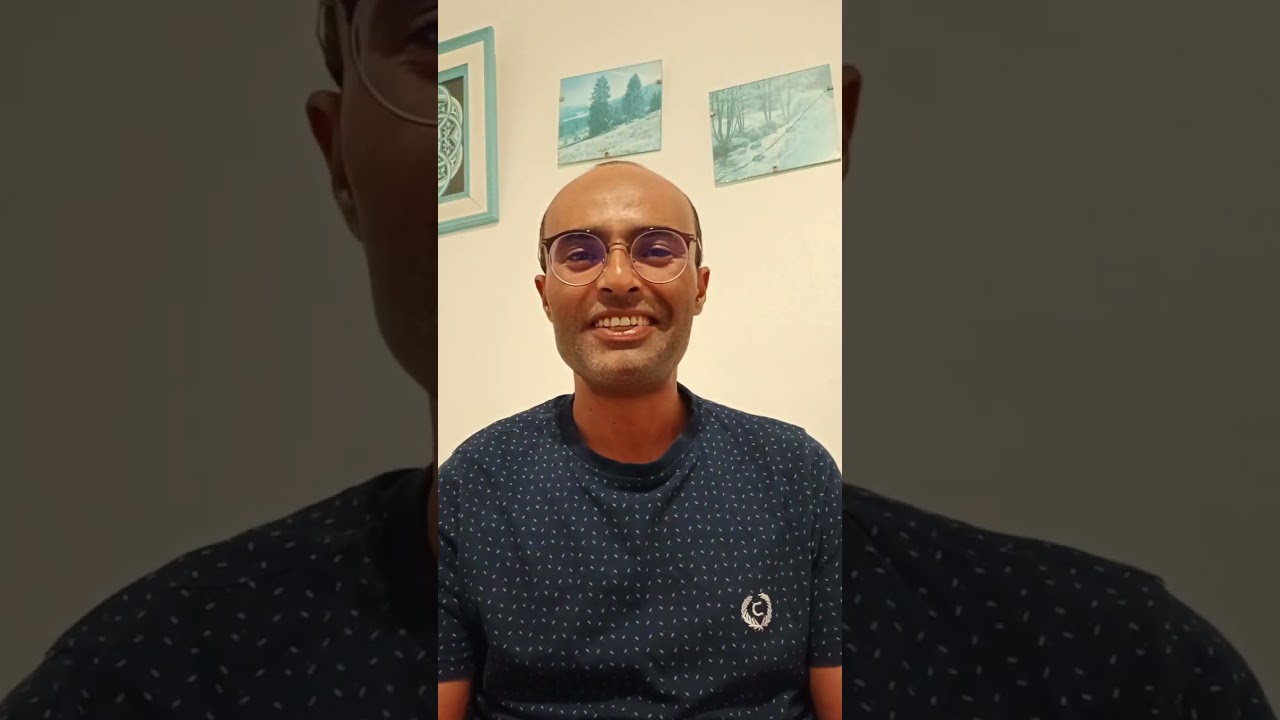
Karim's video
message icon
Contact Karim
repeat students icon
1st lesson is backed
by our
Good-fit Instructor Guarantee
Similar classes
arrow icon previousarrow icon next
verified badge
Python is one of the best, if not the best, language to start learning programming. It is also one of the most widely used languages today, especially in cutting-edge areas such as machine learning.

This popularity means that Python is constantly evolving. It offers a wide range of tools and libraries, which are free and very varied.

As an aeronautical engineer, I like to share my knowledge and derive satisfaction from it by teaching and motivating others.

I'm used to working with people of different ages. I believe in the importance of segmenting learning, visualizing progress, setting concrete goals and practicing regularly.

Beyond these general principles, there is no magic rule or method. Some approaches work with some students but not with others. Adaptation to individual needs is therefore the main objective of private lessons. So I will do my best to find what motivates and helps my student.
verified badge
Learn to code with method and logic
Whether it's to succeed in the NSI (Digital Sciences and Technology) specialization in high school, design personal projects, or prepare for higher scientific studies, mastering code relies on solid algorithmic thinking. I help students understand the structure of programming languages and the logic of data.

Subject areas and languages taught:

Algorithms & Logic: Designing data structures and solving problems.

Programming Languages: Python, C/C++, C# and Java.

Data Management: Analysis and SQL queries / databases.

Basic Web Development: HTML & CSS for creating structured pages.

The goal is to take the student from simply writing code to true autonomy in development.
verified badge
Are you a university student, engineer, or professional who needs to actually use data — not just learn theory about it?
This course is built around real problems and real code. We skip the textbook formulas and go straight to applying statistics and data science the way professionals do: with Python (pandas, NumPy, scikit-learn, matplotlib) and R (RStudio).
What we cover, adapted to your level and goals:
- Descriptive and inferential statistics (the ones that actually matter)
- Data cleaning, exploration, and visualization
- Regression, classification, and intro to machine learning
- Time series and forecasting basics
- R for statistical analysis and academic research

Who this is for:
- University students in statistics, economics, engineering, or biology
- Professionals wanting to move into data analysis or data science
- Researchers who need to process and present data properly

I use Python and R professionally as a working engineer — everything I teach comes from real application, not just academic exercises.
verified badge
Python is a powerful and versatile programming language with countless possibilities. You can use it for data analysis, image processing, automation, software development, hardware control, and much more.

Do you want to create your own software?
Work with data or images?
Automate repetitive tasks?
Control or manage your own hardware?

Whether you are just starting to learn Python or already have a specific project and need some guidance, I would be happy to help you.

My goal is to explain things clearly, adapt to your level, and help you understand not only how to make something work, but also why it works.

Let's turn your ideas into working Python projects!
verified badge
Master Python with Personalized Courses

Discover the art of programming with Python courses tailor-made to meet your specific needs. Whether you are a beginner, intermediate or professional, my lessons are suitable for all levels.

Why Choose My Courses?

Personalized Teaching Approach: Each course is tailored to your skill level and individual goals.

Practical Experience: Learn by doing with real-world projects that build your understanding and skills.

Ongoing Support: Get unlimited email support for any questions you have between sessions.

As a Python expert, I have a passion for teaching and sharing my knowledge. My goal is to guide you effectively in your learning journey.

Book Your First Lesson:

Start your journey to Python mastery now by booking your first lesson. Whether you aspire to enter the development field or hone your existing skills, these courses are designed for you.
verified badge
Discover programming lessons suitable for children! With a fun and educational approach, my lessons allow young minds to dive into the fascinating world of programming. Provide your children with an enriching learning opportunity in a fun and stimulating environment.
verified badge
Do you need professional support for your quantitative data analysis?
I offer you a personalized service, adapted to your academic or professional needs.

Whether you are a student, researcher, consultant or professional, I put my expertise at your disposal to help you:
Prepare and organize your databases,
Perform reliable statistical analyses with R, Stata, SPSS...
Interpret your results rigorously,
Present your work in the form of clear reports, graphics and publications.
Each project is handled with rigor, pedagogy, and confidentiality. You benefit from tailored support, whether for a professional assignment, a dissertation, a thesis, or a publication.

For those who wish to train in parallel, I have also designed a complete course to learn how to explore, manipulate and analyze your data independently.
verified badge
I teach Python specifically for finance and data applications - the kind used in economics, business analytics, and quantitative programs. This isn't a general "learn to code" course; it's built around real financial data, benchmarking, and the workflows you'll actually use in coursework or early career work.

Topics include:
Python fundamentals through a finance lens (data structures, functions, control flow).
Working with financial data and datasets.
Performance benchmarking and writing efficient code.
Applying concepts from Hilpisch's Python for Finance.
verified badge
This course is designed to introduce students aged 7 to 16 to the world of programming through two of the most widely used and industry-relevant languages: C++ and Python.

The class provides a structured, age-appropriate pathway into programming, whether the student is a complete beginner or already exploring coding through platforms like Scratch or Code.org. Emphasis is placed on understanding logic, building problem-solving skills, and writing real code in a supportive, project-based environment.

Taught by an engineering student with hands-on experience in both C++ and Python, this course empowers students to explore the power of code and build a strong foundation in computational thinking — essential for future studies in engineering, robotics, AI, or game development.
verified badge
Private Programming Lessons for you / your family / your company employees
Programming Tutor – IGCSE & Computer Science Subjects
Deeper understanding, stronger results

• Lecturer at the American University AUC
• Over 20 years of experience in training students for government employees, oil companies (BP), food companies (Nestle), banks (CIB), and telecommunications companies (Vodafone).

• Teaching curricula, syllabuses, courses:
o IGCSE (Computer Science 0478, ICT 0417)
o Programming and computer courses for all educational levels (from primary to university)
o Microsoft Windows, Word, Excel, PowerPoint, Outlook, MS-Project
o Programming, C, C++, VB.NET, C#, Python, Database, SQL, MQL, VBA
o HTML, CSS, JavaScript, Angular
o Different database systems
o Data analysis using Excel
o Computer and Information Colleges Curricula
o Using artificial intelligence in life and work

• Master office applications to improve your job performance.
• Prepare yourself to work as a Front-End / Back-End / Full Stack Developer
• Theoretical and practical training for market requirements
• Don't miss out on technology. Lessons are designed for the elderly, in a simple and understandable way (use of computers and their programs, use of mobile phones, dealing with the Internet and social media).
• Lessons are available in person or online.
verified badge
I teach machine learning, AI and Python online to university students, postgraduates, career changers and serious beginners across the UK and Europe. Lessons are in English.

I hold an MSc in Electronics and Electrical Engineering with Distinction and I teach as a Visiting Lecturer on a Master's level module covering data analytics, machine learning and generative AI at a UK university. I also have two accepted international conference papers on deep learning for image classification. I set and mark postgraduate assignments myself, so I know where marks are won and lost on this kind of work.

Who this is for

Undergraduates and postgraduates on AI, ML, data science or computer science modules at any European university. Final year, Master's and thesis students working on a machine learning project. IB and A Level students moving into computing or engineering. Professionals retraining for data roles. Complete beginners who want to learn Python properly rather than copying it from videos.

I work with students on UK, IB and continental European programmes. I have tutored engineering students in Germany and international school students across several countries, so an unfamiliar syllabus or a module taught in a different structure is not a problem. Send me the material and I will work from it.

What we cover

Python for data science with NumPy, Pandas, Matplotlib and scikit-learn. Deep learning using TensorFlow and Keras. Core theory including regression, classification, clustering, decision trees, random forests, neural networks and CNNs, together with the linear algebra, calculus and statistics underneath them. Computer vision and image classification, which is my published research area. Model evaluation, overfitting and hyperparameter tuning. Writing machine learning work up to academic standard, covering methodology, results and critical evaluation.

How lessons work

Send me your module handbook, assignment brief, thesis spec or the code that will not run, and I plan the session around it before we meet. Nothing generic.

In the lesson I explain the concept with a worked example, then you take the keyboard while I watch and correct, because you learn far more doing it than watching me do it. You finish with annotated notes and a clear next step, and you can message me between sessions with questions.

Practical details

Online over Google Meet or Zoom with screen sharing and a shared whiteboard. Sessions run 60 or 90 minutes. I am based in the UK and teach across GMT and Central European time, with evening and weekend slots that suit students anywhere in Europe.

Tell me your course, your deadline and exactly where you are stuck, and I will come back with a plan for the first session.
verified badge
A- TOPICS YOU CAN EXPLORE AND MASTER:
1- PYTHON FOUNDATIONS
• Variables, data types, operators, conditional structures, loops, functions, modules, files, exceptions, and object-oriented programming
• Lists, tuples, dictionaries, sets, comprehensions, debugging, and writing clear, reusable, well-structured code
• Jupyter Notebook, Anaconda, Visual Studio Code, virtual environments, and package management

2 — PROGRAMMING, ALGORITHMS, AND COMPUTER SCIENCE FOUNDATIONS
• Algorithmic thinking, problem decomposition, pseudocode, flowcharts, procedural programming, object-oriented programming, recursion, and modular program design
• Fundamental data structures including arrays, lists, stacks, queues, dictionaries/hash tables, sets, trees, graphs, and their appropriate use
• Searching, sorting, traversal, algorithm efficiency, computational complexity, Big-O notation, debugging, testing, code organization, and problem-solving strategies
• Practical programming exercises ranging from beginner problems to university-level algorithmic and computational challenges

3- DATA PREPARATION AND EXPLORATION
• NumPy and pandas for importing, cleaning, transforming, filtering, grouping, reshaping, and merging data
• Missing values, duplicates, outliers, inconsistent formats, data leakage, and data-quality validation
• Exploratory data analysis using descriptive statistics, Matplotlib, Seaborn, and graphical interpretation

4- MATHEMATICAL FOUNDATIONS
• Linear algebra, vectors, matrices, derivatives, optimization, probability, and statistics
• Loss functions, gradients, distance measures, regularization, likelihood, and model complexity
• Mathematical concepts are explained according to the learner’s level and the requirements of the selected algorithms

5- SUPERVISED MACHINE LEARNING
• Linear and polynomial regression, logistic regression, and regularized models
• k-nearest neighbours, decision trees, random forests, gradient boosting, support vector machines, and Naive Bayes classifiers
• Classification, regression, model assumptions, decision boundaries, feature importance, and interpretation of results

6- UNSUPERVISED LEARNING
• Clustering using k-means, hierarchical clustering, and density-based methods
• Principal component analysis, dimensionality reduction, anomaly detection, and pattern or structure discovery
• Method selection, evaluation of data structure, and interpretation of results without predefined labels

7- MODEL EVALUATION AND IMPROVEMENT
• Training, validation, and test sets; cross-validation; hyperparameter optimization
• Accuracy, precision, recall, specificity, F1 score, ROC–AUC, confusion matrices, MAE, MSE, RMSE, and R2
• Underfitting, overfitting, bias–variance trade-off, class imbalance, feature engineering, feature selection, scaling, and regularization

8- DEEP LEARNING
• Neural-network foundations, activation functions, forward propagation, backpropagation, and gradient descent
• Multilayer perceptrons, convolutional neural networks, recurrent neural networks, and Transformer foundations
• TensorFlow, Keras, or PyTorch depending on the learner’s project and working environment

9- ARTIFICIAL INTELLIGENCE APPLICATIONS
• Natural language processing, text classification, embeddings, sentiment analysis, and foundations of language models
• Computer vision, image classification, fundamental principles of object detection, and image preprocessing
• Recommendation systems, forecasting, anomaly detection, intelligent automation, and decision-support applications

10- GENERATIVE AI AND LARGE LANGUAGE MODELS
• Transformer architecture, tokens, embeddings, attention mechanisms, prompt engineering, Retrieval-Augmented Generation (RAG), and model evaluation
• Use of artificial-intelligence APIs, vector databases, document-retrieval systems, and structured AI-enabled workflows when relevant
• Reliability, hallucinations, bias, privacy, responsible use, and appropriate human validation

11- TOOLS AND LIBRARIES
• Python, NumPy, pandas, Matplotlib, Seaborn, scikit-learn, SciPy, Statsmodels, TensorFlow, Keras, and PyTorch
• Jupyter Notebook, Anaconda, Visual Studio Code, Git, GitHub, SQL, Excel, and Power BI when useful to the project
• Additional libraries may be introduced depending on the selected specialization and dataset

12- PROJECTS, RESEARCH, AND INTERVIEW PREPARATION
• Complete projects covering data preparation, model development, evaluation, interpretation, and presentation of results
• University assignments, dissertations, theses, research projects, portfolio projects, technical interviews, and professional applications
• Code review, debugging, documentation, reproducibility, model comparison, and communication of results

-------------------------------------------------------------------------------------------------------------------------------------------------------------------------------
B- PERSONALIZED TUTORING: LEARNING HOW TO REASON
Machine learning and artificial intelligence become much more accessible when mathematics, algorithms, Python code, data, and real-world applications are clearly connected.

My lessons help you move beyond simply copying code or using models as “black boxes.” You will learn how to define the problem correctly, prepare the data, select an appropriate algorithm, understand how it works, train and evaluate the model, diagnose errors, improve performance, and interpret results rigorously and responsibly.

Each lesson is personalized according to your current level, mathematical background, programming experience, dataset, university work, research project, interview preparation, or professional objective. We begin by identifying your existing knowledge, software environment, expected outcomes, and main conceptual or technical difficulties. We then establish a structured learning plan.

The first lesson combines a discussion of your background, objectives, and tutoring needs; an initial assessment of your current knowledge; personalized planning and organization of future sessions; and a short trial lesson to determine the most effective learning approach.

A typical session may include conceptual explanation, development of mathematical intuition, live coding, guided implementation, model evaluation, technical problem solving, and a concise summary of the next steps.

You may work with your own dataset, university assignment, research project, or professional problem, provided that confidential information is handled appropriately. I can also provide structured examples and datasets suited to your level.

My goal is not simply to help you run an algorithm. It is to help you understand why it is appropriate, how it learns from data, how to evaluate it correctly, why it may fail, and how to build a reliable, interpretable, and scientifically rigorous solution.
verified badge
Learn Python with a structured, hands-on approach! Whether you are a absolute beginner looking to start coding, a student needing help with coursework, or a professional aiming to automate tasks, these lessons are tailored for you.What we will cover:
Core Fundamentals: Variables, loops, functions, and data structures.Object-Oriented Programming: Building reusable and clean code.Real-World Projects: Creating scripts, data analysis, or web scraping based on your goals.

Problem Solving: Learning how to debug and think like a programmer. Lessons are highly interactive. We will write code together from day one, and you will receive practical exercises after every session to build your confidence.
verified badge
I am an experienced computer science teacher with many years of teaching experience and a university degree in Mathematics and Computer Science.

I offer individual online lessons in programming and computer science for school students, as well as support for university students in selected subjects. Lessons can cover Python, MATLAB, SQL and databases, algorithms and programming fundamentals, computer systems, and web development with HTML, CSS and JavaScript.

My lessons are adapted to each student's previous knowledge, current curriculum and individual goals. I explain concepts step by step and focus on understanding the logic behind programming rather than simply memorizing code.

We can work on current school or university topics, programming exercises and assignments, fill gaps in knowledge, prepare for tests and exams, or develop practical programming skills.

Lessons are taught online in Serbian, Bosnian or Croatian, which can be particularly helpful for students from families from the former Yugoslavia who live and study in Germany, Austria, Switzerland or other countries.
verified badge
Learn to code by creating your own games and interactive projects! These online lessons are designed for children and teenagers aged 7–17, from complete beginners to students with some coding experience.

We choose Scratch, Python, or Roblox Studio based on your child’s age, interests, and level. Students learn programming concepts, practise logical thinking, and discover how to find and fix errors independently.

I’ve been teaching since 2018 and have five years of software development experience. Each lesson combines clear explanations with practical activities in a friendly environment where questions are always welcome.

Students also get access to my learning platform to review materials and practise between lessons.
Good-fit Instructor Guarantee
favorite button
message icon
Contact Karim