facebook

Discover the Best Private Electrical Circuits Classes in Alexandria

For over a decade, our private Electrical Circuits tutors have been helping learners improve and fulfil their ambitions. With one-on-one lessons at home or in Alexandria, you’ll benefit from high-quality, personalised teaching that’s tailored to your goals, availability, and learning style.

Find Your Perfect Teacher

Explore our selection of Electrical Circuits tutors & teachers in Alexandria and use the filters to find the class that best fits your needs.

Contact Teachers for Free

Share your goals and preferences with teachers and choose the Electrical Circuits class that suits you best.

Book Your First Lesson

Arrange the time and place for your first class together. Once your teacher confirms the appointment, you can be confident you are ready to start!

0 Teachers your wish list
|
zoom in iconzoom out icon

1 electrical circuits teacher in Alexandria

play iconVideo

Ahmed

verified teacher icon
5.0

1 reviews

(1)

C$14

60-min

/h

trusted teacher iconTrusted teacher
student icon
1Students

Basics of Electronics Engineering, Arduino Programming, and Smart Home CircuitsTranslate this text using Google Translate.

Basics of Electronics Engineering, Arduino Programming, and Smart Home CircuitsTranslate this text using Google Translate.

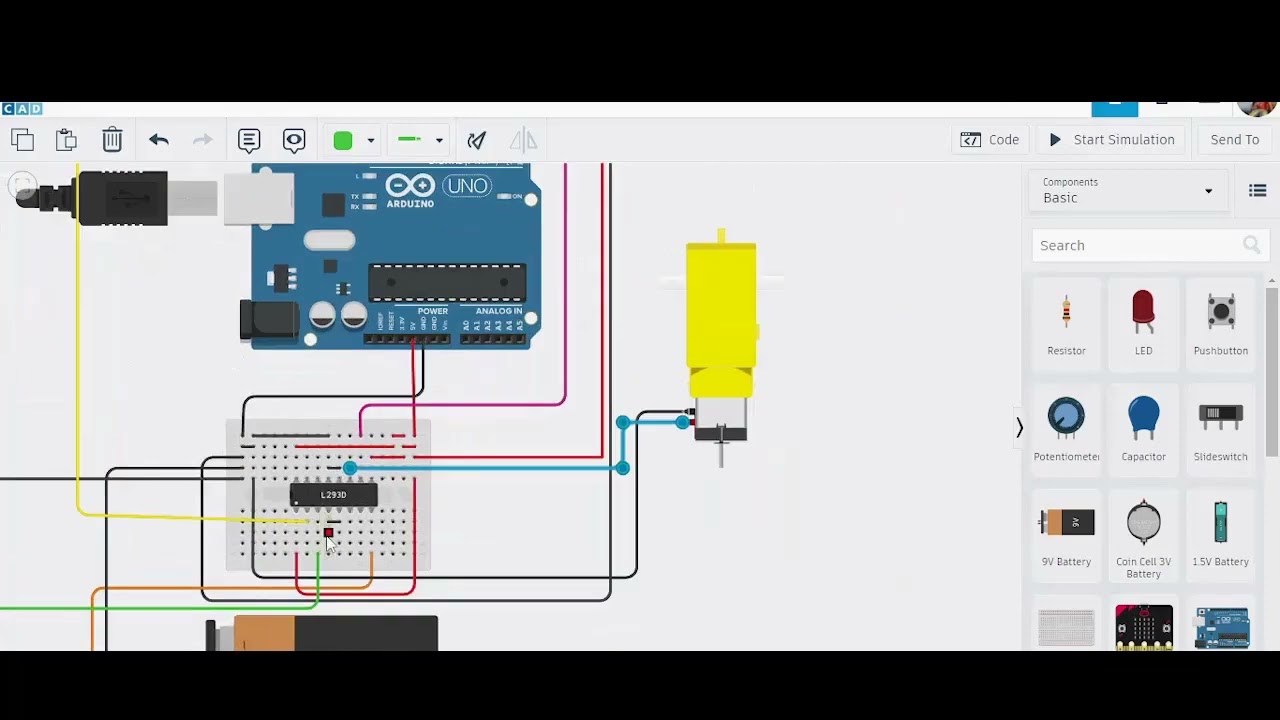
Learn from the ground up, starting with the fundamentals of electronics and various electronic components. Understand the necessary electrical connections to design and program smart home and Internet of Things (IoT) circuits. Explore what Arduino is and the programming language used to control it. Discover how to create programs to control home devices using a mobile phone. Training includes working with real Arduino circuits as well as using simulation software. I offer practical and simplified training that starts from the fundamentals of electronics and progresses to designing and programming smart home and Internet of Things (IoT) systems. The course includes clear theoretical explanations and hands-on applications using real circuits and digital simulation software. Course Content Electronics Fundamentals Introduction to essential electronic components: resistors, capacitors, diodes, transistors, and sensors Understanding proper electrical connections Reading electronic circuits and using the breadboard What is Arduino and How Do We Program It? Introduction to Arduino boards Explanation of the C/C++ programming language used for Arduino How to upload code and test projects step by step Designing and Programming Smart Home Circuits Connecting sensors and smart switches Controlling lighting and household devices Designing a system to control the home using a mobile phone Introduction to IoT and integrating it with home automation Mobile Phone Home Control Creating simple control interfaces Connecting using Wi-Fi or Bluetooth Turning devices on and off and monitoring sensors remotely Practical Training Working with real Arduino circuits Using simulation software such as Tinkercad and Proteus Building ready-to-use practical projects Who Is This Course For? Beginners in electronics Students interested in learning Arduino programming Anyone who wants to build a smart home project Anyone looking to understand how electronics work in a simple and practical way

Video thumbnail
Play icon
Ahmed's video
paperclip

Meet even more great teachers.

Try online lessons with the following real-time online teachers:

Ali

C$60

60-min

/h

Electronics Engineering Tutor Circuit Analysis, Digital Logic Design, Control System & SignalsTranslate this text using Google Translate.

Electronics Engineering Tutor Circuit Analysis, Digital Logic Design, Control System & SignalsTranslate this text using Google Translate.

HI, I’m Ali, an expert tutor in Electronics and Electrical Engineering with strong foundations in circuit design, simulation, and practical hardware systems. Online lessons If Electricity and Electronics make sense in class, but everything starts falling apart when the question becomes a real circuit, a phasor problem, an RLC response, or a simulation task, you are not alone. Most students do not struggle because they are not capable. They struggle because nobody has shown them how to think through the physical system properly, choose the right troubleshooting method, and present the solution with confidence. That is exactly where I help. WHAT MAKES MY TEACHING DIFFERENT I do not teach Electrical Engineering, Electronics, and Circuit Theory as isolated topics. I teach them as one connected system. With my Electronics Engineering background and extensive hands-on experience in hardware systems design, my approach is always: Model & Simulate Solve & Optimise Verify (Hardware/Software) Improve & Troubleshoot This means you do not just memorise formulas for one test. You learn how to approach unfamiliar engineering problems, schematic designs, and hardware constraints with structure, logic, and control. WHO THIS PROFILE IS FOR This profile is built for you if: you understand parts of the topic, but struggle to connect theory to practical hardware implementation under pressure you can follow solved textbook examples, but get stuck when starting circuit designs or simulations alone your circuit setup, phasors, Laplace work, or PCB layouts break down mid-solution you need technical help that is clear, structured, and highly relevant to your engineering modules or lab projects you want a practical engineering method, not vague motivation you want to become independent, mastering industry-standard tools instead of relying on memorised steps WHAT YOU WILL ACTUALLY IMPROVE I focus on the parts of Electronics and Electrical Engineering that usually decide whether a student feels in control, or completely stuck. That includes improving how you handle: Electrical Circuits, Mesh/Nodal Circuit Analysis, AC and DC Circuits Phasors, complex impedance, and RLC Circuits Circuit Simulations (Proteus, LTspice, Multisim, KiCad, Altium Designer) Hardware Design, PCB Layout, and routing constraints Analogue and Digital Electronics, Electronic Devices, and VLSI/SoC concepts Signals & Systems, Signal Processing, and Control Systems block diagrams Digital Logic Design (DLD), Boolean Algebra, K-Maps, and State Machines (FSM) Embedded Systems, microcontrollers, and integrating Machine Learning into hardware Applied Mathematics for Engineers, Calculus, Differential Equations, Fourier Analysis, and Laplace Transforms WHAT I HELP STUDENTS DO Most students come to me because they want more than a basic theoretical explanation. They want to be able to: read the engineering question or schematic properly identify what the circuit or system is actually doing choose the correct analysis method faster set up the software simulations cleanly and debug errors avoid common hardware and design mistakes finish with a working layout or solution they can justify SUBJECT AREAS I SUPPORT My main subject support is built around: Electronics Engineering Circuit Design & Simulation Electrical Engineering Foundations Digital Logic Design Within that, I regularly position lessons around high-value areas such as: Circuit Analysis (AC/DC) & Phasors PCB Layout & Hardware Prototyping Embedded Systems & Microcontrollers Control Systems & Signal Processing Digital Logic Design & Digital Systems Solid State Devices & VLSI Concepts For students on broader technical pathways (like Mechatronics, Robotics, or Automation), I can also support connected areas like programming, sensor integration, and machine learning applications when they are part of your course demands. HOW MY ENGINEERING BACKGROUND HELPS My Electronics Engineering background, combined with practical industry exposure in testing labs, grid stations, and professional freelance PCB design, is useful here for one reason: it pushes disciplined, real-world technical thinking. Instead of rushing to formulas, I train students to understand the circuit model and software verification first. That changes everything. It helps you see: what the components and systems are actually doing why one simulation tool or design choice fits better than another where errors and noise usually enter the solution how to verify the hardware design before moving to fabrication That is the difference between copying worked examples and actually understanding engineering. HOW THE SUPPORT FEELS Students usually work well with me because the sessions are: structured, calm, and technical practical and focused on real design improvement You do not get vague advice. You get direction, software walkthroughs, and a debugging method you can keep using after the lesson ends. This is especially useful for students preparing for exams, difficult university modules, lab tasks, or Final Year Projects (FYPs). WHY THIS APPROACH WORKS A lot of students spend hours watching tutorials, but still cannot design a circuit or solve questions independently. Passive exposure is not the same as technical control. My goal is to make you someone who can start the question or design with confidence, move through the layout or working without panicking, and build stronger engineering performance over time. BEFORE WE START, FIT CHECK To make the first lesson useful from the start, send: Level / Degree Course Exam board or university module guidelines Exam date, project deadline, or timeline 3 priority topics or software tools you want to master The exact point where you get stuck 1 to 3 questions, project briefs, or screenshots

Ali

verified teacher icon
5.0

1 reviews

(1)

C$39

60-min

/h

trusted teacher iconTrusted teacher
student icon
1Students

Electronics & Electrical Engineering Tutor — Circuits, DSP, Control Systems, University LevelTranslate this text using Google Translate.

Electronics & Electrical Engineering Tutor — Circuits, DSP, Control Systems, University LevelTranslate this text using Google Translate.

I offer one-to-one Electronics and Electrical Engineering tuition for university students, college students, and serious learners. Lessons are available online or in person around Birmingham. What I cover: Circuit analysis (DC and AC, Kirchhoff's laws, Thevenin / Norton, op-amps) Digital electronics and logic design Signals and Systems, Digital Signal Processing (DSP) Control systems (Laplace, transfer functions, stability, frequency response) Embedded systems and microcontroller basics Power electronics fundamentals University coursework, lab reports, dissertation and project support Exam preparation for engineering modules How I teach: I start by figuring out exactly which concepts are tripping you up — most students are stuck on one or two key ideas, and once those click, everything else falls into place. I use plenty of worked examples, real circuit diagrams, and clear explanations of the maths behind each topic. For project and dissertation work, I can help you plan, debug, and present your work properly. If you're struggling with an engineering module, preparing for exams, or working on a final-year project, I can help you turn confusion into confidence.

play iconVideo

Ahmed

verified teacher icon
5.0

1 reviews

(1)

C$14

60-min

/h

trusted teacher iconTrusted teacher
student icon
1Students

Basics of Electronics Engineering, Arduino Programming, and Smart Home CircuitsTranslate this text using Google Translate.

Basics of Electronics Engineering, Arduino Programming, and Smart Home CircuitsTranslate this text using Google Translate.

Fundamentals of electronics engineering, Arduino programming, and smart home circuits I offer practical and simplified training that starts from the basics of electronics and goes up to the design and programming of smart home and Internet of Things systems, with theoretical explanations and practical applications on real circuits and digital simulations. Course content: 1. Fundamentals of Electronics Identifying different electronic components: resistors, capacitors, diodes, transistors, and sensors. Understanding correct electrical connections Reading electronic circuits and working with breadboards 2. What is Arduino? And how do we program it? Introduction to Arduino boards Explanation of the C++ programming language used with Arduino How to download code and test projects step by step 3. Design and programming of smart home circuits Connecting sensors and smart switches Lighting and electrical appliance control Designing a system that controls the home using a mobile phone Introduction to the Internet of Things (IoT) and its connection to home control 4. Controlling the home from a mobile phone Creating simple control interfaces Connect using Wi-Fi or Bluetooth Remote device operation and sensor monitoring 5. Practical training Real Arduino circuit experiment Using simulation software such as Tinkercad and Proteus Practical projects ready for implementation Who is this course for? Beginners in the field of electronics Students interested in Arduino programming Who wants to create a smart home project? Anyone who wants to understand how electronics work in a simple and practical way

Video thumbnail
Play icon
Ahmed's video
PreviousShowing results 1 - 1 of 11 - 1 of 1Next

Our students from Alexandria evaluate their Electrical Circuits teacher.

To ensure the quality of our Electrical Circuits teachers, we ask our students from Alexandria to review them.

Only reviews of students are published and they are guaranteed by Apprentus. Rated 4.7 out of 5 based on 22 reviews.

Ghous is a very kind and pleasant teacher. He explains everything clearly and is always responsive and supportive. He adapts to the student’s pace and is very flexible when it comes to scheduling and learning preferences. He has a strong command of Electrical Engineering topics and is able to explain even complex concepts in a simple and understandable way. Ghous is also very helpful with assignments, even when they are in a different language, which shows both his deep subject knowledge and his adaptability. I’m very satisfied with his lessons and would definitely recommend him to others.

To ensure the quality of our Electrical Circuits teachers, we ask our students from Alexandria to review them.

Only reviews of students are published and they are guaranteed by Apprentus. Rated 4.7 out of 5 based on 22 reviews.

Map