facebook
favorite button
1/4
super instructor icon
Trusted teacher
This teacher has a fast response time and rate, demonstrating a high quality of service to their students.
member since icon
Since March 2023
Instructor since March 2023
Translated by GoogleSee original
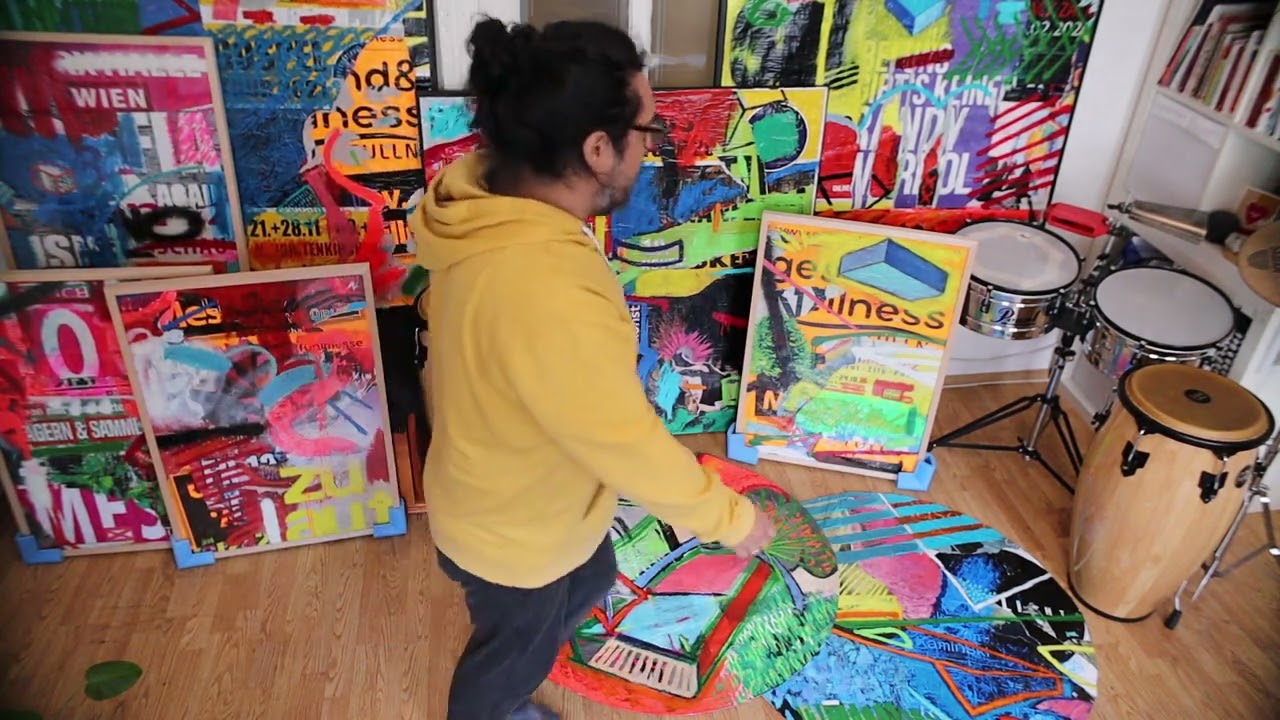
Painting, oils, acrylics, mixed media, drawing
course price icon
From 116.64 C$ /h
arrow icon
-Tools and processes for the initial creation of a painting with acrylics.
-Basic knowledge of mixing colors and preparing the work palette.
-Introduction to two-dimensional composition in a painting.
-Realization of a painting by student.
Location
green drop pin icon
|
Use Ctrl + wheel to zoom!
zoom in iconzoom out icon
location type icon
At teacher's location :
  • Liechtensteinstraße, Viena, Austria
About Me
I am a painting teacher with more than 10 years of experience teaching children, youth, and adults.
I have a Master's in Contemporary Artistic Creation that allows me to deepen with the students in the different aspects of the search in painting.
Education
Master's Degree in Contemporary Artistic Creation - Universidad de Barcelona, Bachelor of Fine Arts with a major in Painting - Pontificia Universidad Católica del Perú.
Experience / Qualifications
Cultural and project manager IRARU Foundation - Vienna Austria
Painting teacher MILAT Foundation - Vienna Austria
Professor of drawing and painting Colegio SANTA MARIA MARIANISTAS - Lima Peru
Professor of plastic arts ACADEMICS PAMER - Lima Peru
Age
Children (7-12 years old)
Teenagers (13-17 years old)
Adults (18-64 years old)
Seniors (65+ years old)
Student level
Beginner
Intermediate
Advanced
Duration
45 minutes
The class is taught in
Spanish
English
Availability of a typical week
(GMT -05:00)
New York
at teacher icon
At teacher's location
Mon
Tue
Wed
Thu
Fri
Sat
Sun
00-04
04-08
08-12
12-16
16-20
20-24
Similar classes
arrow icon previousarrow icon next
verified badge
Anita
Who this is for?

This course is for motivated students aiming for TU / FH / Akademie - Bachelor Degree, in Vienna.
It follows a mentorship model, providing close guidance and structured support to help students prepare for both Matura and architecture admission exams with greater clarity, efficiency, and (hopefully) reduced risk of burnout.

Format & rhythm

• Recommended rhythm: 2 individual sessions / week, each 3–4 h, primarily held in person.
• Online sessions are offered only when in-person attendance is not possible.
• Start: ideally 9–12 months before the admission date.
• First session: skills assessment drawing test + short questionnaire (preferences, favorite architects, goals). Students who present previous work skip the drawing test.
• Language: English (with translations/explanations as needed).
• Recommended age: 16+

1. Working plan — core sections

• Artistic / Representation: traditional drawing (still life, line quality, composition), shape and volume studies, color and material basics, light and values, architectural views, physical modeling and sculpture, photography for portfolio use.
• Technical / Graphic: freehand and constructed perspective, light and shadow, entourage elements, axonometric representation, plans, sections, elevations, layouting (typography, scale, measurements).
• Theory & Context: contemporary architecture history, design thinking, styles and movements, architectural language and terminology, materials and finishes, case studies.
• Digital & Professional Tools: 2D and 3D tools introduction, presentation techniques, workflow examples from real architectural projects.
• Studio Practice & Cognitive Skills: work ethics, time management, critique culture, creative flow, vision pitch and rhetoric, thinking from small to large scale

2. Portfolio building / Motivational letter + Ranking test (TU Wien)

• Portfolio strategy aligned with the student’s vision and academic criteria; project-based work with feedback; curated final portfolio pages; captions and visual storytelling;
• TU Wien - specific support including sketches for the motivation letter and ranking test preparation.

3. Interview & Jury impression

• How to present choices: storytelling (problem → idea → resolution → learning).
• Jury cares about: clarity of thinking, process visibility, curiosity, adaptability, visual literacy, attitude.
• Prepare answers for likely questions: motivations, favorite works, why architecture, what you learned from a project, how you solve problems.

4. Extras (optional)

• Urban sketching, museum visits, architecture and design events, photography walks, model making

5. Resources

• Recommended books, articles, case studies, presentations, 2D and 3D models where needed.
Video thumbnail
Play icon
Jose's video
message icon
Contact Jose
repeat students icon
1st lesson is backed
by our
Good-fit Instructor Guarantee
Similar classes
arrow icon previousarrow icon next
verified badge
Anita
Who this is for?

This course is for motivated students aiming for TU / FH / Akademie - Bachelor Degree, in Vienna.
It follows a mentorship model, providing close guidance and structured support to help students prepare for both Matura and architecture admission exams with greater clarity, efficiency, and (hopefully) reduced risk of burnout.

Format & rhythm

• Recommended rhythm: 2 individual sessions / week, each 3–4 h, primarily held in person.
• Online sessions are offered only when in-person attendance is not possible.
• Start: ideally 9–12 months before the admission date.
• First session: skills assessment drawing test + short questionnaire (preferences, favorite architects, goals). Students who present previous work skip the drawing test.
• Language: English (with translations/explanations as needed).
• Recommended age: 16+

1. Working plan — core sections

• Artistic / Representation: traditional drawing (still life, line quality, composition), shape and volume studies, color and material basics, light and values, architectural views, physical modeling and sculpture, photography for portfolio use.
• Technical / Graphic: freehand and constructed perspective, light and shadow, entourage elements, axonometric representation, plans, sections, elevations, layouting (typography, scale, measurements).
• Theory & Context: contemporary architecture history, design thinking, styles and movements, architectural language and terminology, materials and finishes, case studies.
• Digital & Professional Tools: 2D and 3D tools introduction, presentation techniques, workflow examples from real architectural projects.
• Studio Practice & Cognitive Skills: work ethics, time management, critique culture, creative flow, vision pitch and rhetoric, thinking from small to large scale

2. Portfolio building / Motivational letter + Ranking test (TU Wien)

• Portfolio strategy aligned with the student’s vision and academic criteria; project-based work with feedback; curated final portfolio pages; captions and visual storytelling;
• TU Wien - specific support including sketches for the motivation letter and ranking test preparation.

3. Interview & Jury impression

• How to present choices: storytelling (problem → idea → resolution → learning).
• Jury cares about: clarity of thinking, process visibility, curiosity, adaptability, visual literacy, attitude.
• Prepare answers for likely questions: motivations, favorite works, why architecture, what you learned from a project, how you solve problems.

4. Extras (optional)

• Urban sketching, museum visits, architecture and design events, photography walks, model making

5. Resources

• Recommended books, articles, case studies, presentations, 2D and 3D models where needed.
Good-fit Instructor Guarantee
favorite button
message icon
Contact Jose