


Trusted teacher
This teacher has a fast response time and rate, demonstrating a high quality of service to their students.

Since February 2021
Instructor since February 2021
A1 level Spanish course (based on DELE qualifications): beginners level

From 31.62 C$ /h

Content of the A1 Spanish full course based on the official curriculum of Cervantes.
For this class, you do not need any knowledge of Spanish. From the very start, we will start to speak as much Spanish as possible. You can use English to express yourself at first, and through the course, you will learn how to express needs, use and understand common expressions, and simple sentences used to satisfy your everyday needs.
This a 60 hours, 1 hour per class. It includes all the knowledge you will need to pass a DELE test.
*Disclaimer: you do not have to purchase all 60 hours, but for all A1 level to be considered complete, you must master all of its content. However, if you consider that you already have some of this knowledge, the course can adapt to what you need to learn only.
What you will learn to say in Spanish:
• Identify, describe, and compare: people, places, objects.
• Express why you want to learn Spanish.
• Talk about your day-to-day activities and things you are doing in the present.
• Opinions: express and ask opinions about someone or something; express agreement or disagreement; confirm and deny what others say.
• Knowledge: be able to say if you know or do not know about something.
• Feelings, desires, preferences: express and ask about likes, desires, preferences, need, and wishes.
• Petitions: ask for something in a public establishment (be able to buy things from a store); ask for the price of products.
• Socialize greetings and goodbyes; introductions, meeting someone for the first time, introducing someone else; say thanks and congratulations.
• Oral communication: be able to say that you do not understand something; ask someone to repeat what they said; check if you understood something well; spell out and ask for a word to be spelled out; ask for something to be written down; ask the meaning of a word or expression; ask someone to talk slower, faster or louder.
• What you will learn about Spanish grammar (detailed):
1. The alphabet.
2. Pronunciation: intonation (how Spanish sounds when we enunciate, negate and interrogate); accentuation and rhythm, syllables; how to use upper case and lower case; recognize the main punctuation signs.
3. Nouns: Gender: identify and differentiate feminine and masculine nouns (referred to people). Number: form plurals.
4. Articles: general uses or definite and indefinite articles. When to say and not to say an article.
5. Adjectives: qualifying adjectives (some, most, all, none, occasionally, sometimes, now and again, usually, always, never, I guess, I think, I know, etc); demonym; gender and number; comparatives (the best, the worst, etc).
6. Personal pronouns: stressed and unstressed forms; how to use them next to nouns and direct objects; learn to recognize the direct object.
7. Demonstrative pronouns: how to identify and point at objects.
8. Possessives: stressed and unstressed forms; general uses; when do we use article and possessives.
9. Quantitative: how much is there of something.
10. Interrogatives: how to ask common questions (qué, cuál, quién, etc).
11. Numerals: ordinals and cardinals; weight and common measurements.
12. How to use the word “que” (a common relative).
13. Verbs: uses of the verb to be (Ser y Estar); verbs to like and to appear; common reflexive verbs; introduction to verbal periphrasis (tener que, ir a, querer, poder, necesitar). Impersonal use of the verb Haber.
14. Verb tenses: simple present tense of common regular and irregular verbs; using the present tense as an imperative.
15. Adverbs: quantity, affirmation, negation, mode, time, and place.
16. Prepositions: a, de, para, en, con, etc.
17. Time references: Indicators of the present. Hours, days of the week, months, dates, seasons of the year.
18. Spatial references.
19. The order of a sentence: nouns and verbs.
20. Sentence structures: declarative sentences, interrogative sentences, comparative sentences, casual sentences.
21. Most common abbreviations.
For this class, you do not need any knowledge of Spanish. From the very start, we will start to speak as much Spanish as possible. You can use English to express yourself at first, and through the course, you will learn how to express needs, use and understand common expressions, and simple sentences used to satisfy your everyday needs.
This a 60 hours, 1 hour per class. It includes all the knowledge you will need to pass a DELE test.
*Disclaimer: you do not have to purchase all 60 hours, but for all A1 level to be considered complete, you must master all of its content. However, if you consider that you already have some of this knowledge, the course can adapt to what you need to learn only.
What you will learn to say in Spanish:
• Identify, describe, and compare: people, places, objects.
• Express why you want to learn Spanish.
• Talk about your day-to-day activities and things you are doing in the present.
• Opinions: express and ask opinions about someone or something; express agreement or disagreement; confirm and deny what others say.
• Knowledge: be able to say if you know or do not know about something.
• Feelings, desires, preferences: express and ask about likes, desires, preferences, need, and wishes.
• Petitions: ask for something in a public establishment (be able to buy things from a store); ask for the price of products.
• Socialize greetings and goodbyes; introductions, meeting someone for the first time, introducing someone else; say thanks and congratulations.
• Oral communication: be able to say that you do not understand something; ask someone to repeat what they said; check if you understood something well; spell out and ask for a word to be spelled out; ask for something to be written down; ask the meaning of a word or expression; ask someone to talk slower, faster or louder.
• What you will learn about Spanish grammar (detailed):
1. The alphabet.
2. Pronunciation: intonation (how Spanish sounds when we enunciate, negate and interrogate); accentuation and rhythm, syllables; how to use upper case and lower case; recognize the main punctuation signs.
3. Nouns: Gender: identify and differentiate feminine and masculine nouns (referred to people). Number: form plurals.
4. Articles: general uses or definite and indefinite articles. When to say and not to say an article.
5. Adjectives: qualifying adjectives (some, most, all, none, occasionally, sometimes, now and again, usually, always, never, I guess, I think, I know, etc); demonym; gender and number; comparatives (the best, the worst, etc).
6. Personal pronouns: stressed and unstressed forms; how to use them next to nouns and direct objects; learn to recognize the direct object.
7. Demonstrative pronouns: how to identify and point at objects.
8. Possessives: stressed and unstressed forms; general uses; when do we use article and possessives.
9. Quantitative: how much is there of something.
10. Interrogatives: how to ask common questions (qué, cuál, quién, etc).
11. Numerals: ordinals and cardinals; weight and common measurements.
12. How to use the word “que” (a common relative).
13. Verbs: uses of the verb to be (Ser y Estar); verbs to like and to appear; common reflexive verbs; introduction to verbal periphrasis (tener que, ir a, querer, poder, necesitar). Impersonal use of the verb Haber.
14. Verb tenses: simple present tense of common regular and irregular verbs; using the present tense as an imperative.
15. Adverbs: quantity, affirmation, negation, mode, time, and place.
16. Prepositions: a, de, para, en, con, etc.
17. Time references: Indicators of the present. Hours, days of the week, months, dates, seasons of the year.
18. Spatial references.
19. The order of a sentence: nouns and verbs.
20. Sentence structures: declarative sentences, interrogative sentences, comparative sentences, casual sentences.
21. Most common abbreviations.
Extra information
The teacher will provide the material.
Location

Online from United Kingdom
About Me
A true class should leave you with a new experience you couldn't find anywhere else.
Words carry us, our culture and tradition, through language. They can be tasteless or tasteful, sound like poetry or a wrecked car, make us feel in Heaven or Hell. This is why we should always learn languages hand in hand with its peoples' history. This is what I care about, I want to teach Spanish in a way people can find its beauty and enjoy its diversity.
Are you a visual learner? Logical learner? Any other type of learner? My classes suit your needs and your own process of learning. You can start by taking a class, where we can figure out the course that will work better for you. Maybe you want to take the fun path, or maybe you want the methodical path that will get you through a DELE test. It is all acceptable.
I do not think everyone needs grammar to speak a new language, but I also believe one should not look at grammar with an ill heart. It should not be something to learn as hard inflexible rules, for it actually is what explains the mystery of how a language came to life and keeps breathing.
Through my Spanish classes, I want to give something that people won't forget and that it's about life itself rather than just empty information. I can talk endlessly about literature, art, films, words, etc. And it's always ok to not say things correctly, I understand we are all always learning and will never judge, only teach how to say it better.
Words carry us, our culture and tradition, through language. They can be tasteless or tasteful, sound like poetry or a wrecked car, make us feel in Heaven or Hell. This is why we should always learn languages hand in hand with its peoples' history. This is what I care about, I want to teach Spanish in a way people can find its beauty and enjoy its diversity.
Are you a visual learner? Logical learner? Any other type of learner? My classes suit your needs and your own process of learning. You can start by taking a class, where we can figure out the course that will work better for you. Maybe you want to take the fun path, or maybe you want the methodical path that will get you through a DELE test. It is all acceptable.
I do not think everyone needs grammar to speak a new language, but I also believe one should not look at grammar with an ill heart. It should not be something to learn as hard inflexible rules, for it actually is what explains the mystery of how a language came to life and keeps breathing.
Through my Spanish classes, I want to give something that people won't forget and that it's about life itself rather than just empty information. I can talk endlessly about literature, art, films, words, etc. And it's always ok to not say things correctly, I understand we are all always learning and will never judge, only teach how to say it better.
Education
Graduated in Letters in the Universidad Central de Venezuela. Focused on Latin American and Hispanic literature, as well as Spanish grammar and dialectal diversities.
ELE certificate (teaching Spanish as a foreign language).
Fluent in English.
ELE certificate (teaching Spanish as a foreign language).
Fluent in English.
Experience / Qualifications
5 years of studies in Spanish linguistics and literature.
Spanish teacher with ELE certificate.
3 years of online classes experience.
Spanish teacher with ELE certificate.
3 years of online classes experience.
Age
Teenagers (13-17 years old)
Adults (18-64 years old)
Seniors (65+ years old)
Student level
Beginner
Duration
60 minutes
The class is taught in
English
Spanish
Skills

Availability of a typical week
(GMT -05:00)
New York

Online via webcam
Mon
Tue
Wed
Thu
Fri
Sat
Sun
00-04
04-08
08-12
12-16
16-20
20-24
In this course, you will learn to describe the past and your surroundings with simple expressions and to express your immediate needs. You will be able to have simple conversations, write simple texts about day-to-day life, travel, and biographies. You will be able to express basic knowledge about yourself, your family, shopping, places of interest, profession, etc. Communicate in a simple and direct way.
This a 120 hours course, 1 hour per class. It includes all the knowledge you will need to pass a DELE test.
*Disclaimer: you do not have to purchase all 120 hours, but for all A2 level to be considered complete, you must master all of its content. However, if you consider that you already have some of this knowledge, the course can adapt to what you need to learn only.
**If you are not sure about which class you should be taking, take a class with me and I will kindly test your knowledge and set a course that suits your needs.
This is what you will learn in this course:
• Refer to actions and situations of the past (pretérito indefinido e imperfecto)
• Express and ask about: certainty and uncertainty; if something is possible to do or not; about requirements and obligations; ask, give and deny permission.
• Wishes, desires, and preferences.
• Socializing in Spanish: react to something being told with interest, surprise, joy, embarrassment, sadness, etc.
• Oral communication: point out that something is unintelligible; request someone to repeat what they said; check that you understood correctly; ask for something to get written down; ask the meaning of a word or expression; ask someone to speak slower or louder.
• Develop basic listening, reading, and communicational skills.
This is the grammatical content of the course (detailed):
• Correct pronunciation, intonation, accent, rhythm, rules of accentuation.
• Nouns; articles; qualificative adjectives; personal pronouns (next to the imperative forms; in relation to direct object and indirect object, double pronouns); demonstratives; indefinite and quantifiers; interrogatives.
• Uses of the verbs Ser y Estar.
• Verb tenses, morphology and uses: Pretérito indefinido of regular and irregular verbs; futuro imperfecto; pretérito perfecto/indefinido related to time markers; pretérito imperfect of common regular and irregular verbs; imperative (inviting to realize an action and giving simple instructions); imperative and unstressed pronouns; non-personal forms; infinitives as nouns and periphrasis; participio as an adjective and compound tenses.
• Adverbs and adverbial phrases; quantity; affirmation; negation; mode.
• Prepositions and prepositional phrases.
• Time references: indicators of past; indicators of antecedence and posteriority (antes de, después de...).
• Agreement.
• Sentence construction: exclamatory and imperative sentences; common interjections; non-personal use or the verb Haber and others (cooking recipes, instructions, etc); non-personal use of ‘se’; subordinate sentences; noun phrases with a verb in indicative or infinitive (me parece que, creo que, etc); adverbial phrases of time using the verb in indicative; adjective phrases using the verb in indicative; conditional sentences (si + present/future/imperative).
This a 120 hours course, 1 hour per class. It includes all the knowledge you will need to pass a DELE test.
*Disclaimer: you do not have to purchase all 120 hours, but for all A2 level to be considered complete, you must master all of its content. However, if you consider that you already have some of this knowledge, the course can adapt to what you need to learn only.
**If you are not sure about which class you should be taking, take a class with me and I will kindly test your knowledge and set a course that suits your needs.
This is what you will learn in this course:
• Refer to actions and situations of the past (pretérito indefinido e imperfecto)
• Express and ask about: certainty and uncertainty; if something is possible to do or not; about requirements and obligations; ask, give and deny permission.
• Wishes, desires, and preferences.
• Socializing in Spanish: react to something being told with interest, surprise, joy, embarrassment, sadness, etc.
• Oral communication: point out that something is unintelligible; request someone to repeat what they said; check that you understood correctly; ask for something to get written down; ask the meaning of a word or expression; ask someone to speak slower or louder.
• Develop basic listening, reading, and communicational skills.
This is the grammatical content of the course (detailed):
• Correct pronunciation, intonation, accent, rhythm, rules of accentuation.
• Nouns; articles; qualificative adjectives; personal pronouns (next to the imperative forms; in relation to direct object and indirect object, double pronouns); demonstratives; indefinite and quantifiers; interrogatives.
• Uses of the verbs Ser y Estar.
• Verb tenses, morphology and uses: Pretérito indefinido of regular and irregular verbs; futuro imperfecto; pretérito perfecto/indefinido related to time markers; pretérito imperfect of common regular and irregular verbs; imperative (inviting to realize an action and giving simple instructions); imperative and unstressed pronouns; non-personal forms; infinitives as nouns and periphrasis; participio as an adjective and compound tenses.
• Adverbs and adverbial phrases; quantity; affirmation; negation; mode.
• Prepositions and prepositional phrases.
• Time references: indicators of past; indicators of antecedence and posteriority (antes de, después de...).
• Agreement.
• Sentence construction: exclamatory and imperative sentences; common interjections; non-personal use or the verb Haber and others (cooking recipes, instructions, etc); non-personal use of ‘se’; subordinate sentences; noun phrases with a verb in indicative or infinitive (me parece que, creo que, etc); adverbial phrases of time using the verb in indicative; adjective phrases using the verb in indicative; conditional sentences (si + present/future/imperative).
Learning Spanish is a very useful tool, the knowledge that Spanish and Hispanic culture will offer you is invaluable. You will be able to find great job opportunities and widen your career's possibilities; travel the world and talk to many different people; learn something beautiful and be a part of this world's diversity.
In this class, you will begin to learn Spanish with many useful tools so it doesn't become overwhelming. This a very complete and competitive course where you will learn how to say simple sentences, verb tenses (present, past, and future), adjectives, adverbs, questions (why, what, where, how), and other useful tools like asking for prices and directions. You will also learn many interesting facts that will help you learn better and faster, like why does Spanish sound the way it does, where does it come from and what are the secrets behind its words.
In this class, you will begin to learn Spanish with many useful tools so it doesn't become overwhelming. This a very complete and competitive course where you will learn how to say simple sentences, verb tenses (present, past, and future), adjectives, adverbs, questions (why, what, where, how), and other useful tools like asking for prices and directions. You will also learn many interesting facts that will help you learn better and faster, like why does Spanish sound the way it does, where does it come from and what are the secrets behind its words.
Show more
Similar classes


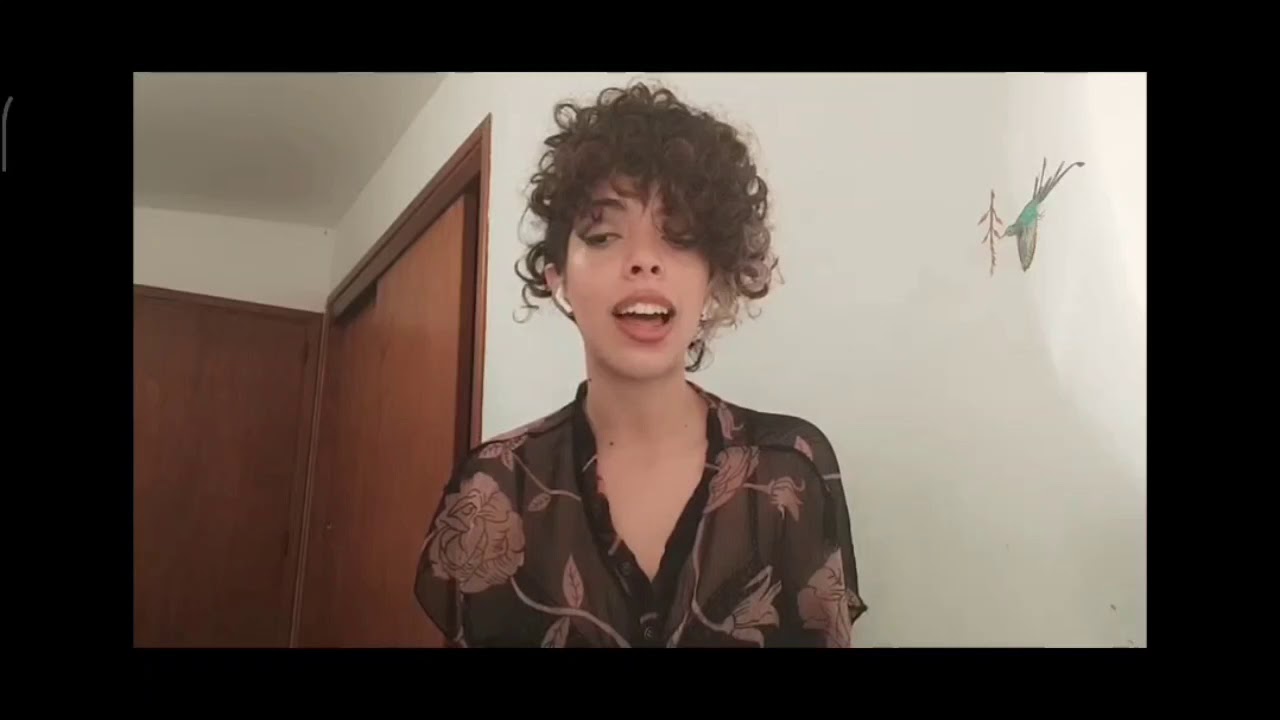

Julia's video

Contact Julia

1st lesson is backed
by our Good-fit Instructor Guarantee
by our Good-fit Instructor Guarantee
Similar classes
Good-fit Instructor Guarantee
Contact Julia