facebook
favorite button
1/3
member since icon
Since May 2025
Instructor since May 2025
Translated by GoogleSee original
Medieval history, history of Spain, English, social sciences, contemporary history, art history
course price icon
From 12 C$ /h
arrow icon
At the secondary and high school levels, teaching the subject on Saturday mornings and the rest of the days in the afternoon is fun and easy, as enjoyable as possible. I also made the summary material and taught the rest.
Extra information
Bring your own material, I will help you.
Location
location type icon
Online from Spain
About Me
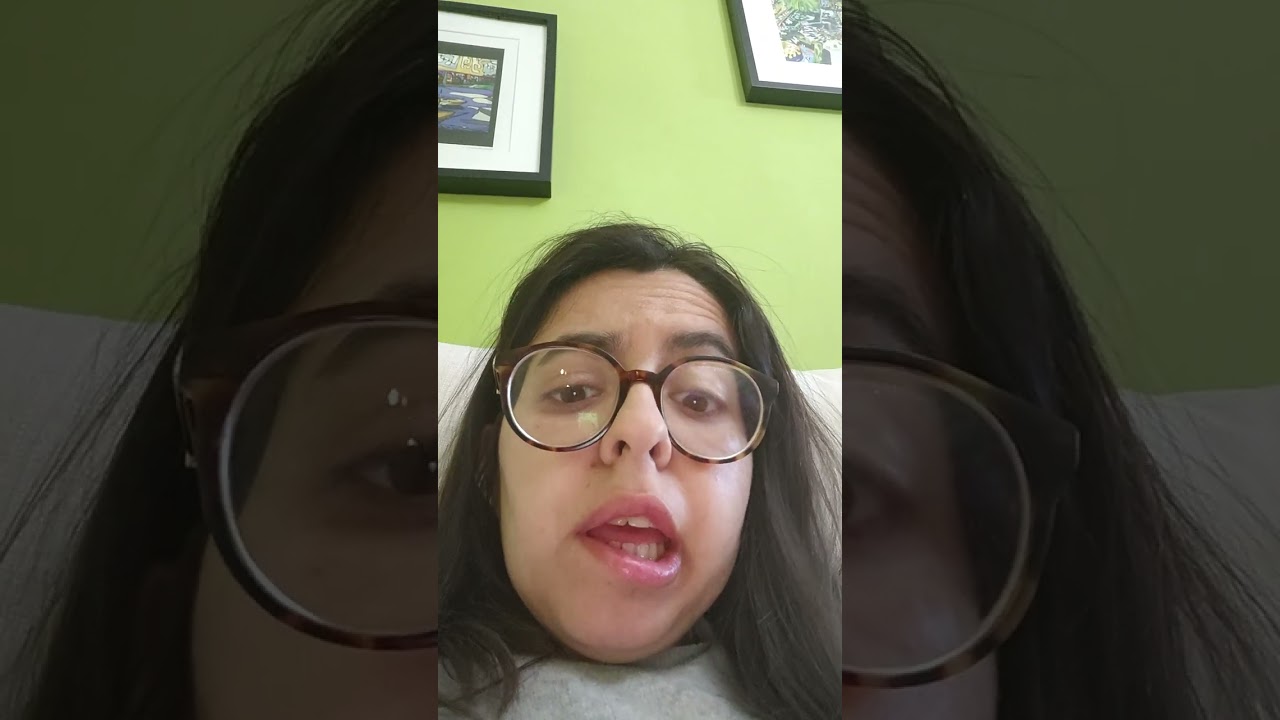
I'm fun and entertaining, I really like teaching, I'm a student of the Spanish history microdegree and I'm also a civil servant. Sometimes I'm absent-minded. I really like helping others.
Education
Bachelor's degree in biomedicine and microdegree in Spanish history, university entrance for those over 25, and I have a high school diploma. I did it at the Lar school and that at the Marist school.
Experience / Qualifications
A lot of experience, I work in an educational center but I have never graded students' grades. They taught me how to grade.
Age
Children (7-12 years old)
Teenagers (13-17 years old)
Student level
Beginner
Intermediate
Duration
90 minutes
120 minutes
The class is taught in
Spanish
English
Availability of a typical week
(GMT -04:00)
New York
at teacher icon
Online via webcam
Mon
Tue
Wed
Thu
Fri
Sat
Sun
00-04
04-08
08-12
12-16
16-20
20-24
I teach history, English, Spanish, and theater via webcam. I help make summaries and teach how to study, learn, and memorize. I give private history lessons and tutoring to help with high school and college classes. I also help summarize and ask exam questions in English.
Read more
You will learn through summaries, exam review, I will help you summarize, I will make outlines, I will help you learn on your own, and I will teach you in a very easy way. I will help you take exams and I will look for exams and topics so you can study comfortably from home.
Read more
Similar classes
arrow icon previousarrow icon next
verified badge
Farouk
This module is a crucial step for any web developer wishing to move from simple DOM manipulation to mastering modern frameworks. The objective is clear: to understand the "invisible foundations" of the language in order to write shorter, more readable code and, above all, be ready to code professionally in React.

🎯 Training Objectives

1- Demystify the modern syntax (ES6+) often used in React.
2- Increase efficiency by using the most powerful syntactic shortcuts.
3- Secure your code to avoid frequent bugs related to missing data.
4- Mastering asynchronicity to manage data calls (API).

📖 Detailed program content

The course is divided into 13 key concepts, illustrated by comparative examples (classic syntax vs. modern syntax) and concrete use cases in React:

1- Ease of writing: Use of Template Literals (`backticks`) for dynamic character strings and Shorthand property names to simplify the creation of objects.

2- Logic and Functions: Mastery of Arrow => Functions (arrow functions) and their implicit return, essential for React components and hooks.

Data manipulation:

1- Destructuring (decomposition) to properly extract data from objects and arrays (e.g., Props and States).

2- Rest & Spread Operators (...) to copy arrays or merge objects without modifying the original (concept of immutability).

Code robustness:

1- Managing default parameter values.

2- Advanced security with Optional Chaining (?.) and Nullish Coalescing (??) to prevent application crashes.

3- Functional Programming: Intensive use of array methods (.map(), .filter(), .reduce(), .find()) to transform data into user interfaces.

4- Architecture and Asynchronism: Code organization via modules (Import/Export) and API request management with Promises and Async/Await.

🛠️ Teaching method: "Learning by doing"

This course is not just about theory. It includes:

The "Interstellar Dashboard" Exercise: A 15-minute thematic case study where students manipulate data from space missions. This allows them to immediately apply destructuring, filtering, and asynchronicity to a real-world project.

The Interactive Quiz: A series of 10 questions designed to validate understanding of each concept before moving on. Each question presents real-world scenarios that developers will encounter in React.

🚀 Learner's result

By the end of this course, students will not only "know" JavaScript; they will understand why and how each syntax is used to build efficient React components. They will leave with a solid foundation to confidently tackle Hooks (useState, useEffect) and complex state management.

Format: Clean visual presentation, coloured syntax for code, and focus on readability.
Video thumbnail
Play icon
Clara's video
message icon
Contact Clara
repeat students icon
1st lesson is backed
by our
Good-fit Instructor Guarantee
Similar classes
arrow icon previousarrow icon next
verified badge
Farouk
This module is a crucial step for any web developer wishing to move from simple DOM manipulation to mastering modern frameworks. The objective is clear: to understand the "invisible foundations" of the language in order to write shorter, more readable code and, above all, be ready to code professionally in React.

🎯 Training Objectives

1- Demystify the modern syntax (ES6+) often used in React.
2- Increase efficiency by using the most powerful syntactic shortcuts.
3- Secure your code to avoid frequent bugs related to missing data.
4- Mastering asynchronicity to manage data calls (API).

📖 Detailed program content

The course is divided into 13 key concepts, illustrated by comparative examples (classic syntax vs. modern syntax) and concrete use cases in React:

1- Ease of writing: Use of Template Literals (`backticks`) for dynamic character strings and Shorthand property names to simplify the creation of objects.

2- Logic and Functions: Mastery of Arrow => Functions (arrow functions) and their implicit return, essential for React components and hooks.

Data manipulation:

1- Destructuring (decomposition) to properly extract data from objects and arrays (e.g., Props and States).

2- Rest & Spread Operators (...) to copy arrays or merge objects without modifying the original (concept of immutability).

Code robustness:

1- Managing default parameter values.

2- Advanced security with Optional Chaining (?.) and Nullish Coalescing (??) to prevent application crashes.

3- Functional Programming: Intensive use of array methods (.map(), .filter(), .reduce(), .find()) to transform data into user interfaces.

4- Architecture and Asynchronism: Code organization via modules (Import/Export) and API request management with Promises and Async/Await.

🛠️ Teaching method: "Learning by doing"

This course is not just about theory. It includes:

The "Interstellar Dashboard" Exercise: A 15-minute thematic case study where students manipulate data from space missions. This allows them to immediately apply destructuring, filtering, and asynchronicity to a real-world project.

The Interactive Quiz: A series of 10 questions designed to validate understanding of each concept before moving on. Each question presents real-world scenarios that developers will encounter in React.

🚀 Learner's result

By the end of this course, students will not only "know" JavaScript; they will understand why and how each syntax is used to build efficient React components. They will leave with a solid foundation to confidently tackle Hooks (useState, useEffect) and complex state management.

Format: Clean visual presentation, coloured syntax for code, and focus on readability.
Good-fit Instructor Guarantee
favorite button
message icon
Contact Clara